EN
EN

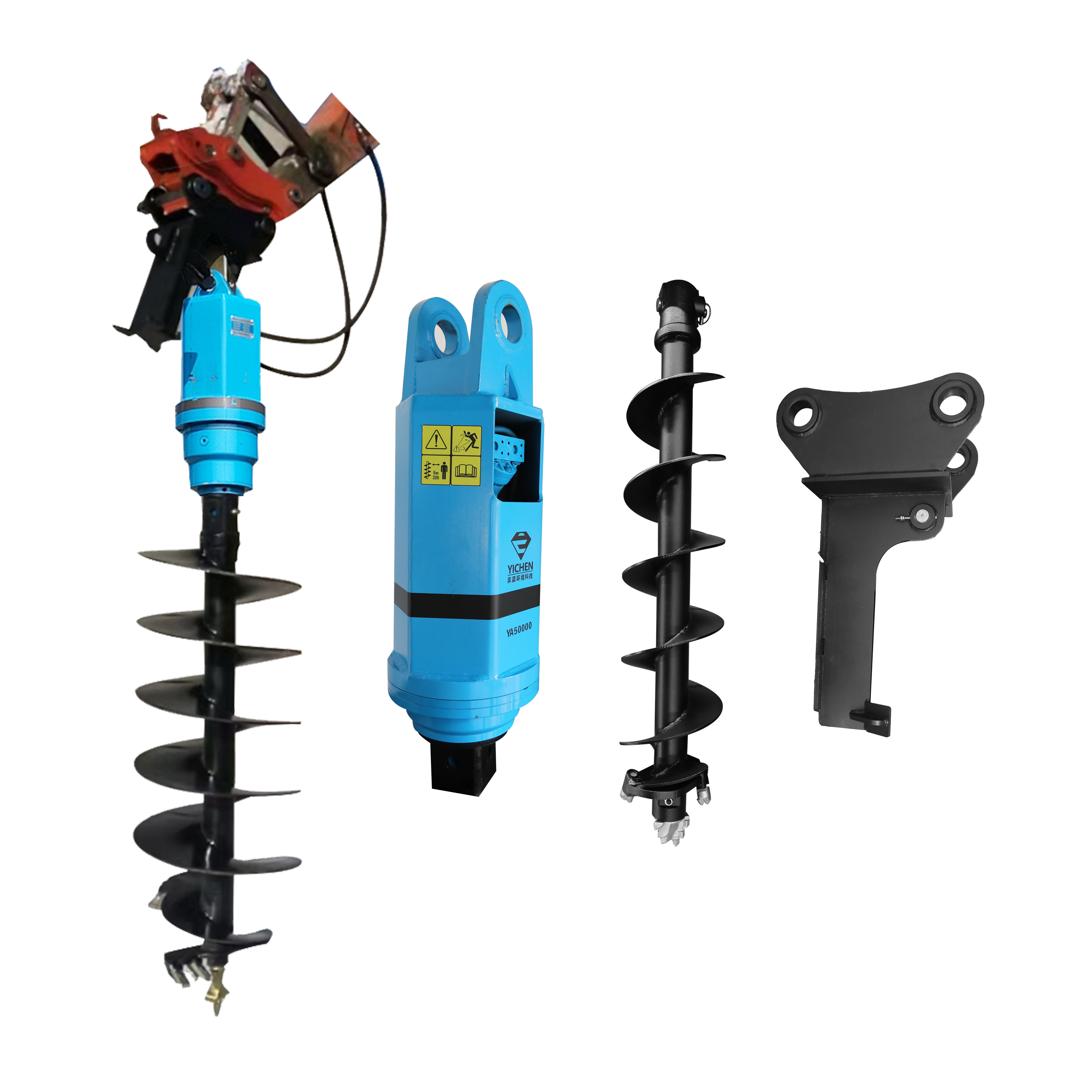
Why Excavator Auger Drilling Accuracy Matters in Foundation Projects
Foundation integrity hinges on excavator auger drilling accuracy—minor deviations can compromise structural load distribution and trigger costly rework. Precise borehole placement prevents misaligned load-bearing elements, mitigating risks of uneven settlement or long-term structural failure.
Vertical Deviation Reduction and ±15 mm Positional Tolerance
Keeping vertical alignment within about 15mm is absolutely essential when it comes to foundation stability. Getting this right means the weight gets distributed evenly across all the supporting piles, saves money on those expensive concrete fixes later, and makes sure everything fits properly with the pre-made building components. Modern GPS systems do most of the heavy lifting here, constantly tweaking the auger path while work is happening. This tech really shines in crowded city environments where even small errors could mean hitting hidden pipes or electrical lines below ground. The precision also helps builders navigate tricky site layouts that wouldn't work with traditional methods.
Case Evidence: 92% Less Re-Drilling in Seattle Mixed-Use Foundation Project
In Seattle's liquefaction risk area, a recent high rise project showed just how important getting things right from the start can be for avoiding problems down the road. The contractors on this job used those fancy laser guided augers on their excavators. They managed to install all 214 foundation piles without hitting any underground gas or water pipes. That saved them three whole days on the foundation work and knocked 40% off what they would have spent disposing of soil. Almost no need for re-drilling came from keeping position variations under 25mm in those tough glacial till soils. Makes sense really – when you get the drilling spot on accurate first time around, nobody has to pay for costly corrections later.
Excavator Auger Drilling Accuracy in Utility and Pipeline Installation
Trench Wall Stability and Adjacent Infrastructure Protection
When done right, auger drilling keeps those trench walls standing strong because it maintains pretty much the same shape throughout the hole, cutting down on wall collapses by about two thirds compared to older techniques according to NULCA's 2023 report. The whole point matters a lot around delicate stuff like gas pipes, fiber optic cables, and water lines since even small mistakes could mean hitting utilities with disastrous results. With modern hydraulics synced up properly, workers can stay within roughly plus or minus two inches while digging, adjusting power automatically whenever they hit something hidden underground or run into different types of dirt. Less shaking means nearby buildings won't get tiny cracks either, which becomes super important in old city areas where any kind of ground movement might cause bigger problems down the line for everyone involved.
Soil Displacement Control Across Variable Ground Conditions
Managing materials during pipeline installation really depends on adapting methods based on what's underneath the ground. When working in cohesive clay, engineers often rely on those special spiral augers that resist wear. These tools help keep the borehole stable by adjusting their speed just right, which cuts down on sideways movement and prevents unwanted surface bumps. For sandier or gravelly areas, the approach changes again. Contractors typically use stop-start digging patterns while injecting polymers into the mix. This combination keeps particles from escaping and stops the whole thing from caving in. Getting this flexibility right matters a lot when going through those tricky transition zones between different soil types. We've all seen how unpredictable densities can throw off the auger path and mess up conduit alignment. And let's not forget about real time pressure checks either. These constant readings give workers instant information they need to tweak things as they go, saving tons of time and money compared to having to fix mistakes later at those mixed composition job sites.
Key Technical Drivers of Excavator Auger Drilling Accuracy
Hydraulic Synchronization for Consistent RPM and Torque Delivery
Getting consistent power through those electronically controlled hydraulic circuits is what makes accurate hole placement possible. Modern equipment keeps the flow rate pretty steady, around a 2% variation throughout the drilling process. This helps avoid those annoying torque changes that throw off alignment when working on foundations. When dealing with different layers of ground material, this stability really counts. If the RPM gets too erratic, holes start wandering outside the acceptable 15mm margin. The latest machines come equipped with pressure sensors that monitor conditions in real time, plus dual acting valves that let operators change direction instantly when they hit something unexpected underground. These features are game changers for preventing auger jams in tough soil conditions while still keeping everything lined up correctly.
Borehole Roundness vs. Penetration Speed Trade-Offs in Cohesive Soils
When working in areas with lots of clay or silt, drillers face a tough choice between going fast and getting good hole shapes. If they push through at more than 35 cm per minute, all that friction creates heat which ends up messing up the bore walls. The result? Oval shaped holes that won't work for structural supports. Some field tests indicate slowing down by around 40% can actually make the holes rounder by about two thirds, but obviously this takes longer to complete projects. Most experienced crews find success when using spiral bits that resist wear while clearing out debris effectively. They also keep an eye on how much the hole diameter varies, aiming for less than 5% difference throughout. This matters a lot for utility work because consistent contact between pipes and surrounding soil is what keeps everything stable over time.
FAQ Section
Why is excavator auger drilling accuracy important for foundation projects?
Excavator auger drilling accuracy is crucial because minor deviations can compromise structural load distribution, leading to uneven settlement or structural failure. Precision in drilling prevents misalignment of load-bearing elements and avoids costly rework.
How does vertical alignment influence foundation stability?
Maintaining vertical alignment within a 15mm tolerance ensures even weight distribution across supporting piles, avoids expensive concrete corrections, and integrates seamlessly with pre-fabricated building components, particularly with the aid of GPS systems in dense urban areas.
What advantages does accurate auger drilling provide in pipeline installations?
Accurate auger drilling maintains trench wall stability, significantly reducing wall collapses, and protects nearby infrastructure like gas pipes and fiber optic cables. It adapts to various ground conditions, preserving the integrity of both the site and adjacent properties.