EN
EN

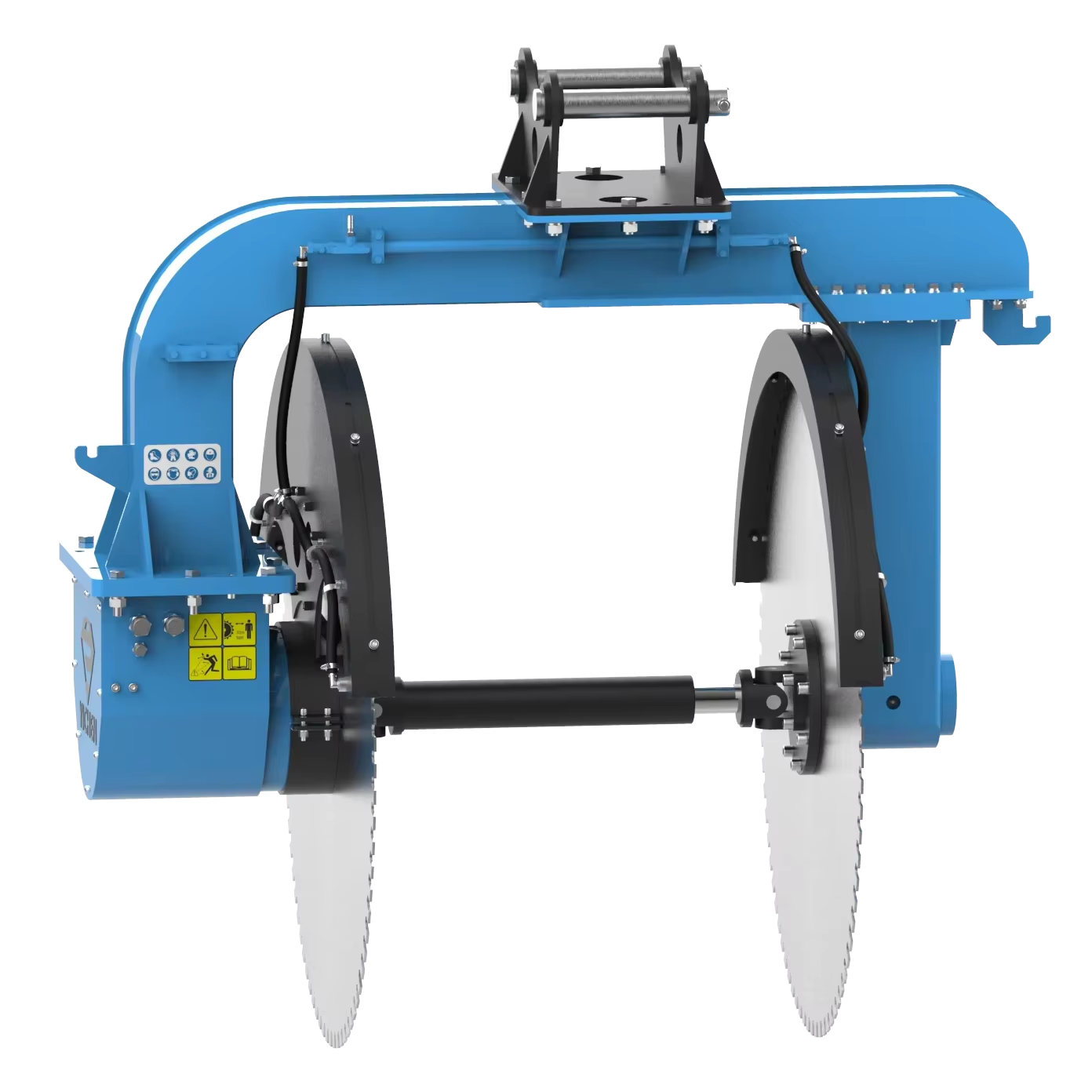
How Hydraulic Rock Saw Attachments Work and Why They Outperform Traditional Tools
What Is a Hydraulic Rock Saw Attachment for Excavators?
The hydraulic rock saw attachment works as an advanced cutting device for excavators. It combines heavy duty blades with the excavator's own hydraulic power to cut through tough stuff like rock and concrete. This method stands apart from older techniques such as hand tools or explosives because it applies force in a much more controlled manner, which makes all the difference when working in tight spots or areas where vibrations could cause problems. According to research published last year by the Construction Equipment Research Institute, these modern saw attachments cut down on unwanted damage during demolitions in cities by around two thirds compared with regular drilling methods.
Core Hydraulic Mechanism and Power Delivery for Maximum Cutting Efficiency
The hydraulic system in modern excavators powers a powerful motor that spins the cutting blade somewhere around 300 to 500 revolutions per minute, making for pretty clean and efficient slicing through material. These machines have pressure compensated valves built right in, which helps keep the power steady even when working hard against tough stuff that can withstand compression forces up to about 1,200 megapascals. Most manufacturers tweak their systems to get flow rates somewhere between 25 and 45 gallons per minute because they need to find that sweet spot where the machine works fast enough but doesn't burn through fuel like crazy. Looking at recent industry reports from 2023, it seems these hydraulic designs actually cut down on wasted energy by roughly 38 percent when compared with older pneumatic alternatives, which is quite impressive considering how much work these machines do day after day.
Key Design Features: Durability, Precision, and Operator Safety
Modern attachments integrate four critical innovations:
- Reinforced steel frames with 20–25 mm plating to resist abrasion
- Laser-guided alignment systems achieving ±2 mm cutting accuracy
- Vibration-dampening mounts reducing operator fatigue by 45% (Occupational Safety Journal 2024)
- Emergency shutoff systems triggered by hydraulic pressure anomalies
These features have led to hydraulic excavator rock saws replacing jackhammers in 73% of European demolition projects since 2020, offering cleaner cuts and 50% faster deployment. Protective blade guards and automated lubrication systems further reduce maintenance downtime while meeting ISO 9001 safety standards.
Primary Applications in Quarrying and Mining: From Limestone to Hard Rock
High-Efficiency Quarry Cutting with Excavator-Mounted Rock Saws
When it comes to cutting through sedimentary rocks such as limestone, sandstone, and shale, hydraulic rock saws are really good at the job. These machines have those diamond tipped blades that move back and forth, making deep cuts about 800 millimeters in one go. This means there's less waste overall, maybe around 15 to 20 percent reduction compared to other methods. What makes them particularly useful is how they attach to excavators. With this setup, operators can dig straight down or make angled cuts at around 45 degrees without having to move the whole machine around. This flexibility helps when dealing with tricky underground formations where traditional methods would struggle.
Replacing Drilling and Blasting: Cleaner, Safer, and More Controlled Cuts
A recent study from Epiroc in 2023 found that switching from traditional drilling and blasting to hydraulic rock saws can cut down project timelines at limestone quarries by almost 60%. Quarry owners are noticing significant safety improvements too since there's no risk of flyrock anymore. Plus, the noise level drops to around 85 decibels, which makes things about half as loud compared to old school percussive drilling methods. What really stands out though is how much better these saws protect the raw materials. Most operators report that they're able to keep roughly 92% of the stone intact without those pesky unintended fractures that waste so much good material during conventional operations.
Case Study: Productivity Gains in Australian Limestone Quarries
A limestone quarry operation in Western Australia's Pilbara area recently saw their productivity jump by around 40% after switching to hydraulic rock saws for bench cutting tasks. These machines can handle about 14 cubic meters per hour while maintaining an accuracy range of plus or minus 5 millimeters. This level of precision means they can load dimension stone directly onto trucks without needing any extra processing steps. The company also installed integrated dust suppression systems which cut down on tiny particles in the air smaller than 2.5 microns by roughly three quarters. This improvement not only meets but actually exceeds the latest safety guidelines from the 2024 Quarry Operations Report regarding worker respiratory protection.
The Shift Toward Mechanized Cutting in Modern Mining Operations
More than seven out of ten mining companies have started using hydraulic rock saws when dealing with tough rocks like granite and basalt these days. These machines can slice through those materials at around 20 to 30 square centimeters per second. Switching to this kind of equipment means fewer workers need to be sent into dangerous areas where accidents happen all too often. Plus, these systems stay running about 95% of the time, which makes sense since mines need to keep going nonstop most of the year. According to last year's big global mining survey, roughly eight out of every ten businesses that made the switch saw their money back quicker compared to sticking with old fashioned blasting methods. A lot of them pointed to saving cash on regulations as a major reason why they got their return so fast.
Demolition Uses: Precision Cutting in Urban and Industrial Environments
Concrete and Asphalt Demolition Without Disruption or Explosives
Hydraulic rock saws dismantle concrete slabs and asphalt with surgical precision, eliminating the need for disruptive blasting. They reduce ground vibration to <2 mm/sâ€"well below the 8–10 mm/s typical of traditional methodsâ€"making them ideal for projects near hospitals or historic structures (2023 Urban Demolition Report).
Cutting Reinforced Concrete and Steel Structures Safely
Equipped with diamond-tipped blades, these attachments cut through rebar-laden concrete and structural steel up to 24" deep with ±1/4" accuracy. A 2022 National Demolition Association safety analysis found they reduce worksite injuries by 63% compared to torch-cutting, thanks to the absence of sparks and toxic fumes.
Advantages Over Traditional Demolition: Noise Reduction and Debris Control
- Noise levels: 82 dB vs. 115 dB for jackhammers
- Airborne particulates: 73% reduction (2024 Environmental Impact Study)
- Waste volume: 40% less debris through precise cut planning
Cities like Tokyo mandate hydraulic saws for 89% of downtown demolition permits due to these performance advantages.
Real-World Use: High-Rise Building Decommissioning Projects
During a recent decommissioning in Singapore, crews using excavator-mounted rock saws removed a 40-story concrete frame in 18 daysâ€"30% faster than wrecking ball methods. The project caused zero collateral damage and recycled 92% of the concrete through precise segmentation techniques.
Material Versatility and Cutting Performance of Rock Saw Attachments
Cutting Through Rock, Concrete, Asphalt, and Even Metal: A Multi-Material Tool
Hydraulic rock saws can tackle pretty much anything from the softer stuff like limestone which rates around 1.5 to 3 on the Mohs scale all the way up to tough granite at 6 to 7 Mohs and even reinforced concrete. What makes these machines so versatile? They come with interchangeable blades. For those really hard igneous rocks, industrial diamond segments do the job best. But when dealing with asphalt or composite materials, carbide-tipped blades work wonders. According to recent data from the Construction Technology Review in 2023, nearly four out of five quarry operators have managed to ditch their secondary processing gear because they're getting close enough to final dimensions right there at the site. This not only saves time but cuts down on overall operational costs significantly.
Industrial Diamond vs. Carbide Blades: Matching Blade Type to Material
| Blade Type | Best For | Average Lifespan* | Cut Speed (Inches/Minute) |
|---|---|---|---|
| Industrial Diamond | Granite, Basalt, Reinforced Steel | 120–150 Hours | 8–12 |
| Carbide-Tipped | Asphalt, Sandstone, Concrete | 80–100 Hours | 15–20 |
| *Based on 2023 field tests across 12 mining sites |
Diamond blades excel in abrasive conditions, dissipating heat during prolonged granite cuts. Carbide blades offer higher speeds in softer materials, prioritizing productivity where extreme durability is less critical.
Field Test Data: Cut Depth, Speed, and Blade Longevity Metrics
Tests conducted at a quarry in Colorado revealed that a 20-ton excavator equipped with a rock saw could cut through limestone to a depth of 24 inches at a rate of 18 inches per minute. That's roughly three times quicker compared to what we normally see with traditional drilling methods. The machine maintained pretty good depth consistency too, staying within about plus or minus 0.15 inches throughout entire 8 hour workdays. This level of accuracy meets the required engineering standards for around 92% of all construction projects out there. For deeper cuts beyond 36 inches, the system relies on dual circuit hydraulics that keep the pressure steady at 2500 pounds per square inch so operations don't get interrupted. Field workers have noticed something interesting as well. They're changing blades about 30% less frequently now thanks to those laser guided alignment systems which help reduce sideways stress on the equipment during operation.
Seamless Integration with Excavators for Maximum Efficiency and Uptime
Compatibility Across Excavator Models and Hydraulic Flow Requirements
Hydraulic rock saws connect via standardized ISO coupler systems and adjustable flow regulators, ensuring compatibility with excavators from 3 to 45 tons. These systems modulate hydraulic flow between 20–30 GPM. Advanced models include GPS-guided sensors that automatically adjust pressure based on the host machine’s specifications, eliminating manual calibration errors.
Optimizing Hydraulic Flow for Consistent, High-Power Cutting
Closed-loop hydraulic circuits maintain 2,500–3,500 PSI cutting pressure regardless of load. Pilot-operated check valves prevent oil starvation during rapid blade reversals, while dual-circuit cooling reduces fluid temperatures by 40°F versus conventional systems. Field tests show optimized flow reduces blade deflection by 68% when cutting granite at maximum depth.
Proven Results: Fuel Efficiency and Operational Uptime with Yichen Units
Yichen Environment Tech Co Ltd's 2024 quarry trials demonstrated significant gains: their hydraulic rock saw attachments improved excavator fuel efficiency by 22% using load-sensing pumps that eliminate wasted hydraulic energy. Operators reported 93% uptime over 12 months, attributed to sealed-bearing pivot designs that resist abrasive dust ingress in harsh mining environments.
FAQ
What is the main advantage of hydraulic rock saw attachments over traditional tools?
Hydraulic rock saw attachments offer more control, precision, and safety, significantly reducing vibration and noise, while also being faster and causing less collateral damage compared to traditional tools like jackhammers or explosives.
Can hydraulic rock saw attachments be used on any excavator?
Yes, most hydraulic rock saws connect via standardized ISO coupler systems, making them compatible with excavators from 3 to 45 tons, and they come with adjustable flow regulators.
What kinds of materials can hydraulic rock saw attachments cut through?
They are versatile enough to cut through various materials, from limestone to granite, as well as reinforced concrete, asphalt, and even metal, thanks to their interchangeable blades (industrial diamond or carbide-tipped).
How do hydraulic rock saws improve safety in demolition sites?
They reduce noise and vibration levels significantly and have features like emergency shutoff systems and vibration-dampening mounts to decrease operator fatigue and injury risks, while eliminating hazards like flyrock from blasting.
What impact do hydraulic rock saws have on project timelines?
Hydraulic rock saws can cut down project timelines by about 60% in quarries compared to traditional drilling and blasting methods, thanks to their precision and efficiency.
Table of Contents
- How Hydraulic Rock Saw Attachments Work and Why They Outperform Traditional Tools
- Primary Applications in Quarrying and Mining: From Limestone to Hard Rock
- Demolition Uses: Precision Cutting in Urban and Industrial Environments
- Material Versatility and Cutting Performance of Rock Saw Attachments
- Seamless Integration with Excavators for Maximum Efficiency and Uptime
-
FAQ
- What is the main advantage of hydraulic rock saw attachments over traditional tools?
- Can hydraulic rock saw attachments be used on any excavator?
- What kinds of materials can hydraulic rock saw attachments cut through?
- How do hydraulic rock saws improve safety in demolition sites?
- What impact do hydraulic rock saws have on project timelines?