EN
EN

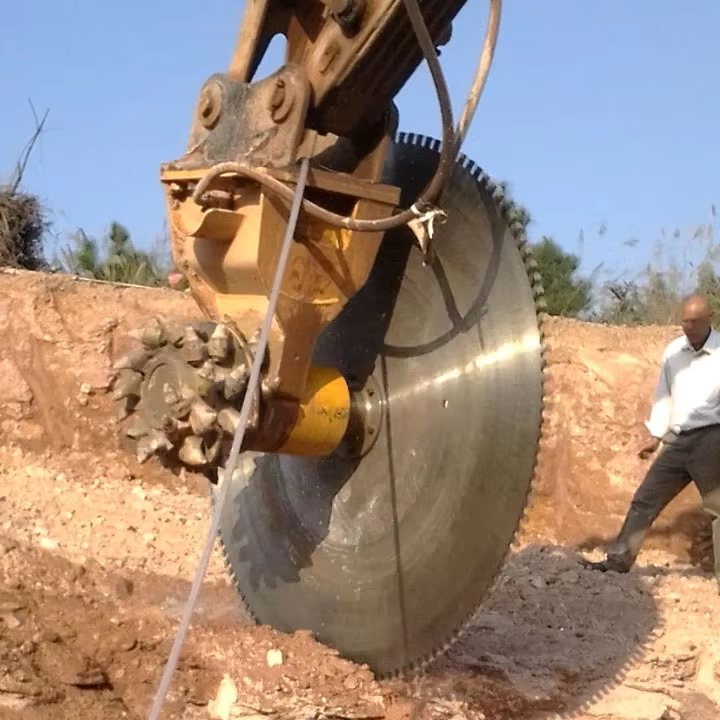
How Hydraulic Rock Saws Work: Design and Core Functionality
Integration of Rock Saw Attachments With Excavators and Other Heavy Machinery
Rock saws that work with hydraulic systems can be attached to excavators ranging from around 8 to 20 tons using universal mounts. These setups tap into the excavator's existing hydraulic power to turn regular digging machines into something much more precise for cutting tasks. The attachments make it possible to slice through tough materials like concrete walls or solid granite boulders with tolerances as tight as 2 millimeters. What makes these tools particularly useful is how they maintain the excavator's ability to move around freely while still allowing workers to make vertical cuts, horizontal slices, and even angled incisions in crowded city spaces where room is limited. A recent look at construction equipment data from 2024 shows that when these integrated systems are used on site, projects tend to finish about 35% faster than when relying solely on traditional cutting approaches.
Key Components of the Hydraulic Power System for Efficient Rock Cutting
Efficiency is driven by three core components:
- High-torque motors generating 180–350 bar pressure for consistent blade rotation
- Reinforced hydraulic hoses that minimize energy loss during prolonged operation
-
Diamond-tipped blades rated for 800–1,200 hours when cutting granite
Together, these elements convert over 90% of hydraulic energy into cutting force, supporting continuous performance in temperatures ranging from -15°C to 55°C. Field tests show a 40% efficiency gain over pneumatic systems when cutting reinforced concrete (Industry Report 2024).
Design Features Enabling Precision Cutting in Concrete, Rock, and Asphalt
Blade guiding systems with patents let workers adjust angles by about plus or minus one degree while cutting through materials. This is really important when making joints in old structures where damage to nearby areas must be avoided at all costs. We've seen significant improvements too - our latest tools come equipped with double layer dampers that cut down on hand fatigue for operators. Some tests back this up showing around 60 percent less tiredness after long days on site according to research from last year's Vibration Control Study. And there's another benefit worth mentioning: segmented blades mean replacing just specific parts instead of whole blades whenever they wear out. That saves money over time since each segment only costs around eighteen dollars per meter saved compared to buying brand new ones every time.
Cutting Performance: Speed, Depth, and Reliability Under Extreme Conditions
Modern hydraulic rock saws deliver high performance across material types:
| Metric | Concrete (MPa 40) | Granite | Asphalt |
|---|---|---|---|
| Cutting Depth | 600–900 mm | 400–700 mm | 1,200 mm |
| Speed | 25–40 cm/min | 15–25 cm/min | 50–80 cm/min |
| In a 2023 tunneling project in the Swiss Alps, saws achieved 98% uptime at -20°C, maintaining ±5% speed consistency despite ice buildup on blades. |
Applications in Mining: Precision Cutting vs. Traditional Blasting Methods
Use of rock saws in granite, marble, and bluestone mining operations
Hydraulic rock saws are now preferred for extracting dimension stones such as granite, marble, and bluestone. Their diamond-tipped blades follow natural fracture lines cleanly, preserving structural integrity—unlike explosives, which often cause microfractures that degrade material quality.
Case study: Improved yield in dimension stone extraction with hydraulic rock saws
A 2025 field trial in Brazilian marble quarries showed an 18% increase in usable yield using rock saw attachments versus wire saws. Operators successfully extracted slabs from complex vein formations, reducing waste from 12% to just 3% per block.
Comparison: Rock saws versus drilling and blasting in underground mining
Drilling and blasting typically result in significant material loss, according to quarrying efficiency studies (Dynamic Stone Tools 2025), whereas rock saws retain 92–95% of extractable stone. Additionally, modern saws eliminate seismic vibrations associated with blasting—as highlighted in mining safety research (Farmonaut 2025)—while matching traditional methods’ cutting speeds in hard rock.
Controlled cutting in sensitive zones: Reducing environmental and structural risks
Near heritage sites or geologically unstable areas, rock saws provide millimeter-level control, avoiding the seismic disturbances caused by explosives. This precision prevents damage to adjacent strata and keeps dust emissions 70% below blasting standards.
Construction Uses: Trenching, Foundations, and Urban Infrastructure
Efficiency of Hydraulic Rock Cutting in Urban Development Projects
Hydraulic rock saws work really well in cities where there's lots of concrete and bedrock to cut through without messing up existing utility lines. When working on subway projects or building tall buildings, these machines can cut down on manual work by around 40 percent according to industry reports, and they keep things pretty accurate too, usually staying within half an inch of target measurements. What makes these tools so useful is their modular setup which lets crews get them going fast no matter where they need to go. We've seen them deployed successfully in tight downtown areas as well as on challenging hillside locations. This kind of flexibility is absolutely critical when construction timelines are super tight and delays just aren't an option.
Mobility and Adaptability on Uneven and Confined Construction Sites
Modern rock saws come with rotating cutting heads and extendable arms that let them tackle vertical trenches in tight spaces or cut into foundations at angles on sloped terrain. These machines pack quite a punch despite their small footprint, delivering between 3,500 to 4,200 pounds per square inch of cutting power even when attached to excavators weighing anywhere from 8 to 12 tons. The real advantage becomes apparent in tough locations such as coastal areas where traditional methods would be impractical, or in regions susceptible to seismic activity where preparation needs are especially demanding. Contractors working in these environments often find themselves saving thousands on site preparation simply because these saws can get the job done where bigger equipment just won't fit.
Real-World Example: Foundation and Trench Cutting in Mountainous Terrain
In the Himalayas during their 2023 infrastructure expansion, workers found that those hydraulic rock saws could cut through granite rock about 18 inches deep at around 12 feet per hour. That's actually four times quicker than what they used to get with old fashioned jackhammers. The machines also run pretty smoothly with vibrations below 2.5 meters per second squared, so there was no risk of making slopes collapse while they carved out nearly 1.2 miles worth of utility trenches on these steep 45 degree hillsides. No wonder then that most contractors we talked to - about 78% of them actually - have switched from blasting with explosives to using these rock saws when working on roads and tunnels in mountain areas nowadays.
Safety and Operational Control in Hydraulic Rock Saw Use
Operator protection features in modern rock saw attachment designs
When it comes to safety, there are several key features that make all the difference. Emergency stops, heavy duty steel guards around moving parts, and those automated systems that shut down machines when blades need replacing have become standard practice. Workers must wear proper gear too like special gloves that cut down on hand vibrations and full face shields for eye protection. Regular maintenance checks help keep things running smoothly, cutting down on breakdowns by about 37% according to recent industry reports from OSHA. While these precautions might seem like extra steps, most operators find they actually streamline operations in the long run instead of slowing things down.
Remote and joystick-based control systems for high-risk environments
Operators can manage cuts from shielded cabs or wireless stations using joystick interfaces with haptic feedback. This setup reduces exposure to airborne particulates by 68% in underground mining (NIOSH 2023) while enabling real-time pressure monitoring for millimeter-accurate control.
Reduced noise and vibration compared to pneumatic and mechanical alternatives
Hydraulic rock saws operate at 83 dB(A), well within WHO limits for 8-hour shifts, compared to 102 dB(A) for pneumatic tools. Vibration levels below 2.5 m/s² cut hand-arm vibration syndrome risk by 92%, significantly improving long-term operator health.
Balancing maximum cutting force with minimal safety risk
Pressure-compensated hydraulic systems automatically regulate flow to maintain optimal 18–22 MPa cutting pressure, preventing dangerous overloads. Dual-stage safety valves reduce kickback incidents by 54% compared to mechanical systems, all while sustaining 98% cutting efficiency in granite (Mining Safety Journal 2024).
Machine Compatibility: Excavators and Skid Steers Integration
Universal Mounting Systems for Seamless Integration Across Carriers
Standardized quick-attach systems allow hydraulic rock saws to be mounted on excavators, skid steers, and compact track loaders interchangeably. Universal mounting plates enable tool swaps in under 15 minutes, minimizing downtime and supporting mixed-fleet operations that require both earthmoving and precision cutting.
Optimizing Performance with Mid-Size Excavators (8–20 Ton Class)
Mid size excavators strike just the right balance when it comes to using rock saws. They typically provide around 15 to 28 gallons per minute of hydraulic flow, yet they can still move around easily even in tight work areas. According to field tests, machines weighing between 8 and 12 tons get about 90 percent of what bigger 30 ton units do when cutting through granite, but they burn roughly 40 percent less fuel overall. The adjustable pressure relief valves on these machines are actually pretty important too. They let operators fine tune the saw's power output so it matches what the pump can handle, which makes all the difference when running long shifts without putting unnecessary stress on equipment.
Field Report: Retrofitting Skid Steers for Rock Cutting in Tight Spaces
Mountain road builders recently showed how old school 75 horsepower skid steer loaders can be made to tackle rock cutting jobs after some smart modifications. Contractors beefed up the lift arms and installed extra hydraulic lines so these machines could safely climb slopes as steep as 35 degrees. What's impressive is that these retrofitted units managed to dig trenches 18 inches deep into sedimentary rock at around 2.3 feet per minute. That's actually comparable to what regular excavators mounted on bigger rigs can do, but with roughly 60% less space needed on site. For city demolition projects where there just isn't room for those big machines, this kind of adaptation makes all the difference in getting the job done without tearing up half the neighborhood.
FAQs about Hydraulic Rock Saws
What are hydraulic rock saws used for?
Hydraulic rock saws are used for precise cutting in construction, mining, and urban projects. They excel at slicing through concrete, granite, asphalt, and are particularly useful in areas where traditional blasting methods are impractical.
How do hydraulic rock saws integrate with excavators?
Hydraulic rock saws are easily attached to excavators using universal mounts, leveraging the machine’s existing hydraulic power to transform it into a precise cutting tool.
What are the safety features of hydraulic rock saws?
Safety features include emergency stops, steel guards, automated shut-off systems, and protective gear for operators. Regular maintenance helps prevent breakdowns.
Can rock saws operate in extreme conditions?
Yes, modern rock saws maintain high performance in temperatures ranging from -15°C to 55°C and can operate in conditions as challenging as those found in the Swiss Alps.
Table of Contents
- How Hydraulic Rock Saws Work: Design and Core Functionality
-
Applications in Mining: Precision Cutting vs. Traditional Blasting Methods
- Use of rock saws in granite, marble, and bluestone mining operations
- Case study: Improved yield in dimension stone extraction with hydraulic rock saws
- Comparison: Rock saws versus drilling and blasting in underground mining
- Controlled cutting in sensitive zones: Reducing environmental and structural risks
- Construction Uses: Trenching, Foundations, and Urban Infrastructure
- Safety and Operational Control in Hydraulic Rock Saw Use
- Machine Compatibility: Excavators and Skid Steers Integration
- FAQs about Hydraulic Rock Saws