EN

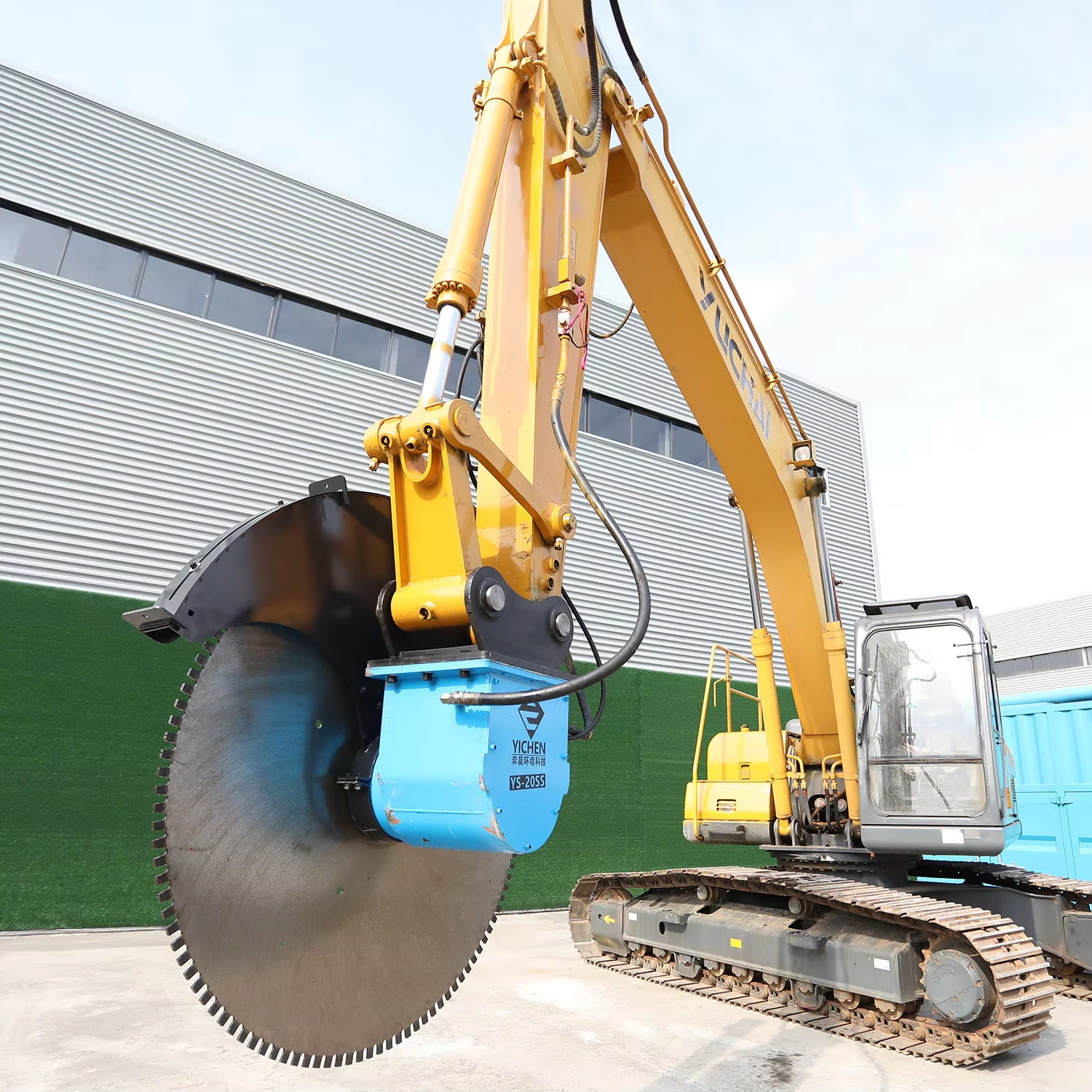
Rock saw attachments are used for cutting hard materials such as natural rock, concrete, and asphalt in construction, demolition, quarrying, and infrastructure projects. However, achieving a suitable cutting result requires more than selecting the right attachment. Contractors also need to plan the cutting depth, establish an accurate cutting line, and organize the work sequence before starting the machine.
Poor preparation can lead to unnecessary rework, inconsistent cutting, equipment stress, and delays. A clear cutting plan helps operators understand the project requirements, prepare the work area, and use the excavator rock saw more effectively.
In this guide, we explain how to plan rock saw cutting operations, from determining the required depth to organizing the cutting sequence and checking equipment readiness.
1. Why Rock Saw Cutting Planning Matters
Rock saw cutting is often used when a project requires a defined cut through hard material rather than uncontrolled material removal.
Typical applications include:
-
Cutting rock for utility trenches.
-
Removing sections of concrete pavement.
-
Preparing excavation boundaries.
-
Cutting rock in quarry operations.
-
Working on concrete and rock structures during demolition.
-
Creating defined cutting lines for infrastructure projects.
Each application has different requirements. A utility trench, for example, needs a planned route and depth that match the installation design. Concrete removal may require clearly defined cutting boundaries to control the size of the sections being removed.
Before choosing an operating method, establish three basic requirements:
-
Cutting depth: How deep does the cut need to extend?
-
Cutting alignment: Where should the blade travel?
-
Work sequence: In what order should the cutting operations be completed?
These requirements provide the foundation for equipment selection and jobsite preparation.
For different rock cutting and construction applications, explore our excavator rock saw attachments to review the available equipment configurations.
2. How to Determine the Required Rock Saw Cutting Depth
Cutting depth should be determined by the project design and the actual material conditions.
Start with the project specifications
Review the drawings, engineering requirements, and construction specifications before selecting a cutting depth.
For trenching projects, confirm the required excavation depth and whether the rock saw is expected to complete the full cut or create an initial cutting boundary for subsequent excavation.
For concrete cutting, identify the required separation depth and the thickness of the material being removed.
Do not assume that the required cutting depth is the same as the maximum cutting depth advertised for an attachment. Maximum capability and the appropriate working depth for a particular project are different considerations.
Check the material and site conditions
Natural rock formations may vary in hardness, structure, and thickness. Concrete structures may contain reinforcement or embedded services.
These conditions can affect the cutting method and the number of passes required.
Before starting, inspect the material and confirm whether the proposed cutting approach is appropriate. Where underground utilities, reinforcement, or other concealed elements may be present, follow the relevant site investigation and safety procedures.
Select an appropriate cutting setup
The blade configuration, attachment model, excavator capacity, and operating parameters must be compatible.
YC Equipment provides different rock saw configurations, including single-saw and double-saw models. Buyers should compare the actual specifications of the selected model with the intended cutting depth, width, and application.
For consistent depth control, the manufacturer's excavator rock saw application information also describes the use of a depth guide roller.
For more information about cutting accuracy in reinforced concrete applications, read our guide to rock saw cutting precision.
3. How to Plan and Mark the Rock Saw Cutting Line
Cutting alignment is essential when the finished excavation or concrete section must follow a defined route.
Establish the cutting route
Use approved project drawings and site measurements to determine the cutting line.
Mark the intended route clearly so that the operator and ground personnel can identify the beginning, direction, and endpoint of the cut.
For utility trenching, consider the route in relation to existing underground infrastructure, access points, and the planned installation.
For road and concrete work, identify the boundaries of the material to be removed and any nearby structures that must remain undamaged.
Check excavator positioning
Before cutting, position the excavator so that it can follow the planned route without unnecessary repositioning.
Check the machine's working area, ground stability, visibility, and available clearance. The attachment should be able to reach the required cutting position without exceeding the excavator or attachment manufacturer's operating limits.
If the excavator must move during the operation, plan where it can safely reposition and how the cutting line will be continued accurately.
Confirm blade alignment
Check the attachment orientation and blade condition before operation.
The blade must be suitable for the intended material and installed according to the manufacturer's instructions. Incorrect blade selection, damaged components, or an unsuitable attachment configuration may affect cutting quality and equipment safety.
Where the project requires a precise cut, verify alignment before committing to the full operation.
4. How to Organize the Rock Saw Cutting Sequence
A planned cutting sequence helps coordinate equipment movement, material removal, and site access.
Step 1: Complete the site preparation
Clear the working area of unnecessary obstacles and establish the required exclusion zone.
Confirm underground utility information, access restrictions, material conditions, and the location of nearby structures.
Make sure the operator and supporting personnel understand the planned work sequence and communication arrangements.
Step 2: Complete the initial alignment
Position the excavator and attachment at the designated starting point.
Check that the blade is aligned with the marked cutting route and that the attachment can operate within the manufacturer's requirements.
Any required initial checks or test operations should follow the equipment manual and site procedures.
Step 3: Carry out the planned cutting passes
Follow the approved cutting sequence and avoid making uncontrolled changes to the route or depth.
Monitor the operation for unusual vibration, noise, blade movement, or other abnormal conditions. If an unexpected problem occurs, stop the operation and investigate it safely.
For projects requiring multiple passes, ensure that each pass is coordinated with the overall excavation or removal plan.
Step 4: Coordinate material removal
Once the planned cutting work is complete, the next operation may involve breaking, lifting, excavating, or removing the separated material.
The appropriate method depends on the material, project design, and site conditions.
Plan the relationship between cutting and material removal in advance so that excavators, lifting equipment, transport vehicles, and ground personnel do not interfere with one another.
Step 5: Inspect the finished cut
Check whether the completed cut follows the intended route and satisfies the project requirements.
Record any deviations, incomplete sections, or areas requiring additional work.
If further cutting is necessary, reassess the conditions and confirm the revised operation is suitable before proceeding.
5. Factors That Affect Rock Saw Cutting Performance
Even with a good cutting plan, several factors can influence the actual result.
Material characteristics: Natural rock, reinforced concrete, and asphalt have different cutting characteristics. Hardness, abrasiveness, reinforcement, and material consistency should all be considered.
Blade selection: The blade must be compatible with the rock saw and appropriate for the material. Follow the manufacturer's specifications for blade type, dimensions, rotation limits, and installation.
Hydraulic compatibility: The excavator must provide the required hydraulic flow and pressure for the selected attachment. Always verify the model-specific requirements before operation.
Cutting depth and alignment: The intended depth and route affect attachment positioning and the number of required passes. Use the approved project measurements rather than estimating these values during operation.
Equipment condition: Worn blades, damaged components, lubrication problems, or hydraulic issues may affect performance. Follow the manufacturer's inspection and maintenance recommendations.
Operator preparation: Operators should understand the attachment controls, operating limitations, and site-specific safety requirements before beginning the work.
6. Rock Saw Pre-Operation Planning Checklist
Before starting a cutting project, review the following points:
| Planning area | What to confirm |
|---|---|
| Project requirements | Cutting depth, width, route, and finished result |
| Material | Rock, concrete, asphalt, reinforcement, and other conditions |
| Site preparation | Underground utilities, access, obstacles, and exclusion zones |
| Attachment | Correct rock saw model and blade configuration |
| Excavator | Operating weight, hydraulic specifications, and compatibility |
| Alignment | Cutting line, starting point, and machine positioning |
| Work sequence | Cutting passes, material removal, and equipment coordination |
| Safety | Operator training, guards, procedures, and communication |
| Final inspection | Completed cut and any additional work required |
This checklist is a general planning aid. It does not replace the equipment manufacturer's operating manual, project engineering requirements, or applicable local safety regulations.
7. Common Rock Saw Planning Mistakes to Avoid
Choosing cutting depth based only on maximum equipment capacity
The maximum cutting depth of an attachment does not automatically determine the correct depth for a project. Always start with the engineering requirements and confirm the appropriate working method.
Starting without a clearly marked cutting line
Unclear alignment can result in deviations and unnecessary corrective work. Mark and verify the route before positioning the attachment.
Ignoring underground utilities
Underground infrastructure must be identified and managed before excavation or cutting begins. Follow the applicable utility-location procedures and permit requirements.
Selecting a blade without checking compatibility
A blade must match the attachment's specifications and the material being processed. Never assume that a blade is suitable simply because its physical dimensions appear compatible.
Overlooking the material removal sequence
Cutting is only one part of the project. Consider how separated material will be removed, handled, and transported before starting the operation.
Frequently Asked Questions
How do I determine the correct cutting depth for an excavator rock saw?
Start with the project drawings and required finished dimensions. Then check the material thickness, site conditions, and the specifications of the selected rock saw model. The appropriate working depth should be confirmed before operation.
Can a rock saw be used for utility trenching?
Yes. Excavator rock saws are used in rock trenching and underground cable installation applications. However, the cutting route, depth, width, underground utility locations, and equipment compatibility must be established before work begins.
Why is cutting alignment important?
Accurate alignment helps the operator follow the planned route and reduces the need for corrective cutting. It is particularly important when working near existing structures, road boundaries, or infrastructure.
Should a rock saw complete the entire excavation?
Not necessarily. Depending on the material and project design, a rock saw may create the initial cuts or defined boundaries, while additional excavation or material removal equipment completes the work.
How do I choose between a single-saw and double-saw attachment?
Consider the required cutting configuration, project application, excavator compatibility, and the specifications of each model. Ask the manufacturer to confirm which configuration is suitable for your intended work.
Conclusion: Plan the Cut Before Starting the Machine
Successful rock saw operations begin with a clear cutting plan. Contractors should define the required depth, mark the cutting route, verify blade and excavator compatibility, and organize the sequence of cutting and material removal before starting work.
A structured approach helps reduce avoidable mistakes and makes it easier to coordinate equipment and personnel on site.
If you are planning rock cutting, concrete cutting, or trenching work, explore YC Equipment's excavator rock saw range. Share your excavator model, material type, required cutting depth, and project application to help the team identify a suitable attachment configuration.
Have a specific cutting project in mind? Contact YC Equipment for a quotation and share your excavator and project requirements.
Table of Contents
- 1. Why Rock Saw Cutting Planning Matters
- 2. How to Determine the Required Rock Saw Cutting Depth
- 3. How to Plan and Mark the Rock Saw Cutting Line
- 4. How to Organize the Rock Saw Cutting Sequence
- 5. Factors That Affect Rock Saw Cutting Performance
- 6. Rock Saw Pre-Operation Planning Checklist
- 7. Common Rock Saw Planning Mistakes to Avoid
- Frequently Asked Questions
- Conclusion: Plan the Cut Before Starting the Machine