EN

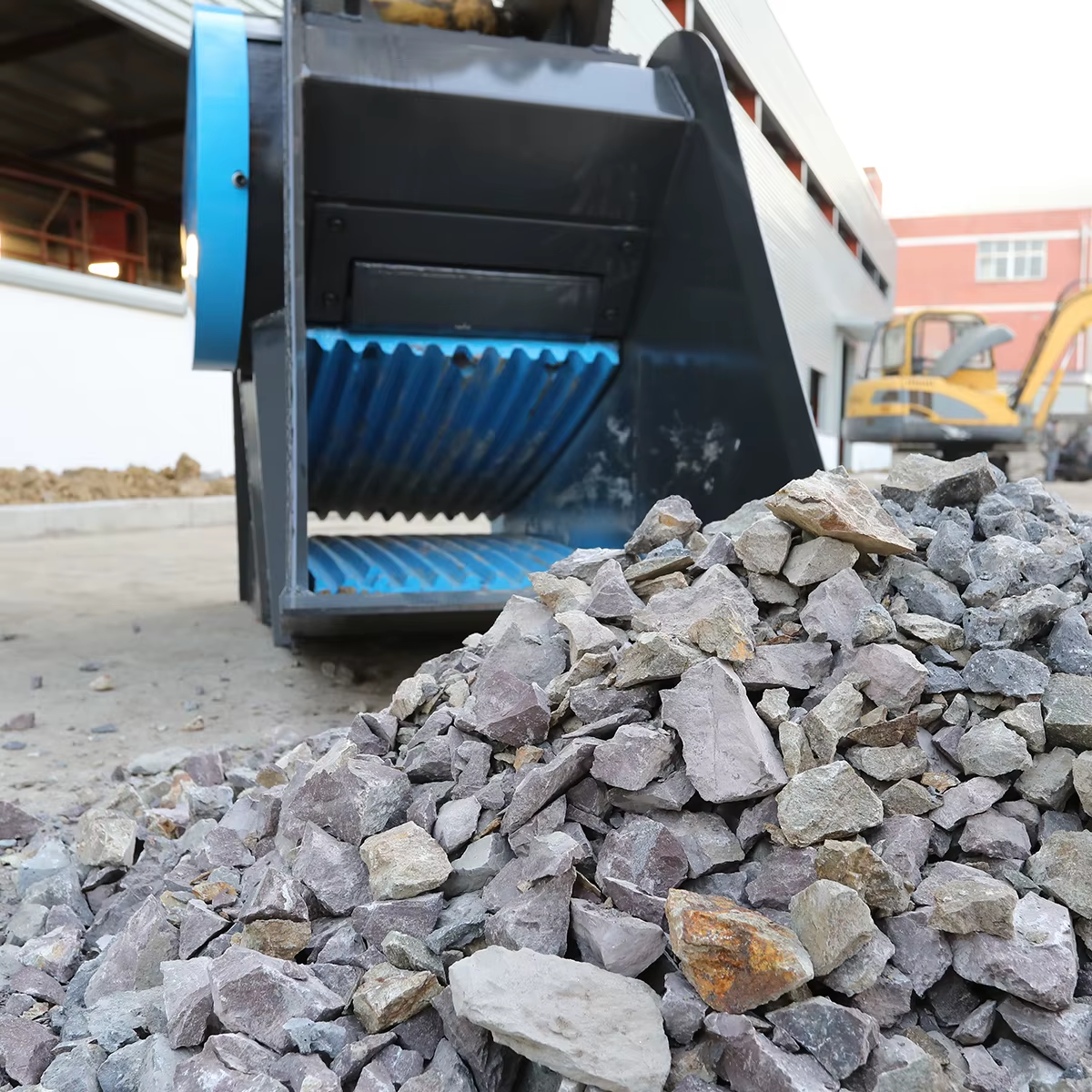
Choosing the right crusher bucket involves more than matching an attachment to an excavator. Buyers also need to understand the size of material that can enter the crushing chamber and the particle size required at the outlet. These two factors influence equipment selection, material handling, recycling plans, and the suitability of the processed material for its next use.
Whether you are processing demolished concrete, bricks, asphalt, or natural stone, understanding crusher bucket feed size and output size can help you prepare a more accurate equipment specification before requesting a quotation.
This guide explains the key dimensions, the factors that affect crushing results, and the questions to ask before purchasing an excavator crusher bucket.
1. What Do Feed Size and Output Size Mean?
Feed size and output size describe two different aspects of a crushing operation.
Feed size refers to the dimensions of the material entering the crusher. For an excavator crusher bucket, buyers should check the feed opening dimensions and the manufacturer's stated limits for acceptable incoming material. The opening dimensions alone do not necessarily establish the maximum safe or effective size of every material type.
Output size refers to the size of the crushed material leaving the equipment. Depending on the crusher design, this may be described as an adjustable output setting or a specified output-size range.
For example, a project may involve breaking down concrete pieces into aggregate suitable for site preparation. The incoming concrete must fit the crusher's accepted feed requirements, while the processed material must meet the project's intended size and grading requirements.
These dimensions should be checked separately. A large opening does not automatically mean the attachment can produce every desired fine particle size, and a stated output setting does not guarantee that every discharged particle will have exactly the same dimensions.
2. Why Crusher Bucket Feed Opening Size Matters
The feed opening determines the space available for material to enter the crushing chamber. If incoming pieces are too large or poorly shaped, they may not feed correctly. This can interrupt operation and require additional material preparation.
Before selecting a crusher bucket, consider the following factors.
Material dimensions and shape
Measure representative pieces of the material you expect to process, including unusually large pieces. Irregular concrete sections, reinforced demolition waste, and angular rocks may behave differently from uniformly sized material.
Ask the manufacturer to confirm the acceptable feed dimensions for your actual material. Do not assume that a piece will fit and crush effectively simply because one of its dimensions is smaller than the listed opening width.
Material composition
Concrete, brick, asphalt, and natural stone have different physical characteristics. Reinforcement, embedded metal, contamination, and variations in material strength may also affect feeding and processing.
Describe the material accurately when requesting a quotation. If the job involves reinforced concrete or mixed demolition waste, identify those conditions rather than specifying only “concrete.”
Site preparation and handling
If the incoming material is too large, preliminary breaking or sorting may be required. This can add handling steps and affect the overall workflow.
Compare the cost and practicality of preparing the feed with the cost of selecting an attachment that better matches the material size. The right decision depends on the project, the available equipment, and the expected volume of material.
3. How to Choose the Right Crusher Bucket Output Size
The appropriate output size depends on what happens to the crushed material after processing. Before comparing models, establish the intended use of the final product.
Concrete recycling and site reuse
For concrete recycling, identify the requirements of the intended application. Material used as general fill may have different requirements from aggregate intended for a specified construction application.
Do not select a fine output setting simply because smaller material appears more versatile. A finer product may require additional processing and can affect operating time. Confirm the required grading and any applicable project specifications before choosing the equipment.
Roadwork and construction preparation
Road base, sub-base, and other construction applications may require material to meet defined grading, quality, and contamination requirements.
A crusher bucket's output-size specification is only one part of this assessment. The processed material may also need screening, separation, testing, or additional crushing before it can be used for the intended purpose.
Quarrying and natural stone
For natural stone processing, consider the downstream process. Material destined for further crushing may have different size requirements from material intended for a particular site application.
Discuss the stone type, incoming dimensions, target output, and expected duty cycle with the supplier. These details are more useful for model selection than choosing an attachment based on bucket capacity alone.
Confirm the meaning of the specification
When comparing suppliers, ask whether the published figure represents an adjustable discharge setting, a nominal output range, or another manufacturer-defined measurement.
Also ask whether the stated result depends on the material type or operating conditions. This helps avoid comparing specifications that appear similar but are defined differently.
4. Factors That Affect Crushing Results
The selected feed opening and output setting are important, but they do not determine the entire result.
Material properties: Hardness, strength, abrasiveness, moisture, and the presence of reinforcement or contaminants can affect feeding, wear, and processing behaviour.
Feed consistency: Material with a relatively consistent size and composition may be easier to process than irregular mixed waste. Oversized pieces and unsuitable contaminants should be handled according to the manufacturer's operating instructions.
Hydraulic compatibility: The excavator must supply hydraulic flow and pressure within the requirements of the selected attachment. Insufficient or incompatible hydraulic supply can affect operation. Excess flow or pressure can also create equipment risks if the system is not designed for it.
Attachment and excavator matching: Operating weight, mounting interface, machine stability, and the excavator manufacturer's limits all need to be considered alongside the crushing specifications.
Downstream requirements: The output may need to meet a project-specific grading specification. If it does not, further screening or processing may be necessary.
For these reasons, published output ranges should be treated as equipment specifications, not guaranteed production results for every jobsite.
5. How to Match Feed and Output Requirements to Your Project
A practical selection process starts with the material and the required result, rather than with a model name.
-
Identify the material. Specify whether you will process concrete, bricks, asphalt, natural stone, or mixed demolition waste. Describe reinforcement and contamination where relevant.
-
Measure the incoming material. Record representative dimensions and the largest pieces likely to enter the crusher. Ask the supplier to confirm the acceptable feed limits.
-
Define the required output. State the target particle size or grading and explain how the processed material will be reused or handled.
-
Check the excavator. Provide the machine model, operating weight, available hydraulic flow and pressure, mounting dimensions, and other information requested by the manufacturer.
-
Review the full workflow. Consider material preparation, loading, crushing, screening, stockpiling, and any additional processing.
-
Request model-specific confirmation. Ask the supplier to identify a suitable model and confirm the relevant specifications in writing before placing an order.
This process helps buyers compare equipment based on their actual requirements instead of relying on a single dimension or headline specification.
6. What to Check Before Buying a Crusher Bucket
Before requesting a quotation, prepare a concise project brief covering these points:
-
Incoming material: Type, condition, reinforcement, and contamination.
-
Feed dimensions: Typical piece size, largest expected pieces, and required opening dimensions.
-
Target output: Required particle size, grading, and intended application.
-
Carrier machine: Excavator make and model, operating weight, hydraulic specifications, and mounting interface.
-
Operating conditions: Expected workload, jobsite access, material handling method, and duty cycle.
-
Additional processing: Whether screening, sorting, or secondary crushing will be needed.
-
Support requirements: Wear parts, maintenance guidance, documentation, and technical support.
A complete brief allows the supplier to assess compatibility more effectively and reduces the risk of selecting an attachment that does not suit the job.
You can also review YC Equipment's crusher bucket product information and its guide on choosing the right crusher bucket for your excavator size.
Frequently Asked Questions
What is the difference between crusher bucket feed size and output size?
Feed size describes the incoming material and the limits specified for entry into the crushing chamber. Output size describes the dimensions or setting of the processed material leaving the crusher. Both must match the project's requirements.
Does a larger feed opening always mean better performance?
No. A larger opening may accommodate larger pieces, but overall suitability also depends on the material, crushing design, excavator compatibility, target output, and operating conditions.
Can a crusher bucket produce a consistent particle size?
The result depends on the crusher design, its specified output setting, the material being processed, and operating conditions. Ask the manufacturer how the output specification is defined and whether additional screening is needed to meet your grading requirements.
How do I know which crusher bucket model is suitable for my excavator?
Provide the excavator model, operating weight, hydraulic flow and pressure, mounting details, material type, feed dimensions, and target output. The manufacturer should confirm compatibility against the specifications of the exact attachment model.
Should I choose the finest available output size?
Not necessarily. Select an output specification based on the intended application and its material requirements. A finer output is not automatically more economical or more suitable for every project.
Conclusion: Specify the Material Before Choosing the Model
Selecting a crusher bucket begins with two practical questions: what size material must enter the crusher, and what size material needs to come out?
By defining the feed dimensions, target output, material characteristics, and excavator requirements before purchasing, buyers can compare models more accurately and plan a more suitable crushing workflow.
If you are evaluating a crusher bucket for concrete recycling, demolition, roadwork, or natural stone processing, share your material details and excavator specifications with YC Equipment. The team can help you review the available model options and confirm the relevant technical requirements before you make a purchasing decision.
Request a quotation from YC Equipment:
https://www.ycequipments.com/contact-us
Table of Contents
- 1. What Do Feed Size and Output Size Mean?
- 2. Why Crusher Bucket Feed Opening Size Matters
- 3. How to Choose the Right Crusher Bucket Output Size
- 4. Factors That Affect Crushing Results
- 5. How to Match Feed and Output Requirements to Your Project
- 6. What to Check Before Buying a Crusher Bucket
-
Frequently Asked Questions
- What is the difference between crusher bucket feed size and output size?
- Does a larger feed opening always mean better performance?
- Can a crusher bucket produce a consistent particle size?
- How do I know which crusher bucket model is suitable for my excavator?
- Should I choose the finest available output size?
- Conclusion: Specify the Material Before Choosing the Model