EN
EN

Principles of Soil Stabilization and Geotechnical Importance
When it comes to making unstable soils suitable for building strong foundations, soil stabilization offers several approaches including mechanical methods, chemical treatments, and even biological enhancements. The basic idea is to boost shear strength while cutting down on how much water can pass through the soil. This helps prevent problems such as ground sinking or soil turning liquid during earthquakes, which matters a lot for things like roads, runways at airports, and tall buildings. A report from Future Market Insights back in 2024 suggested that money being spent on these stabilization techniques might grow around 12 percent each year because cities keep expanding and there's greater need for structures that can withstand changing weather conditions. These days, experts who study soil properties spend more time creating customized stabilization strategies rather than one size fits all solutions. They focus on spreading weight properly across different areas so structures stay safe not just today but decades from now too.
Role of In-Situ Stabilization/Solidification in Sustainable Development
Treating soil right where construction happens through in situ stabilization cuts down on environmental disturbance significantly. Recent research from 2023 shows when builders mix in stuff like fly ash or agricultural leftovers into their projects, they end up using about 40 percent less new material while still getting similar strength results compared to regular concrete methods. This approach actually supports two important United Nations sustainability targets: making cities more livable (Goal 11) and responsible consumption practices (Goal 12). Many top companies in the field have started installing monitoring systems that track binder usage in real time. These systems help maintain green standards without slowing down construction schedules too much, though some smaller firms still struggle with implementing such technology effectively.
How Excavator-Based Soil Mixing Enhances Structural Integrity
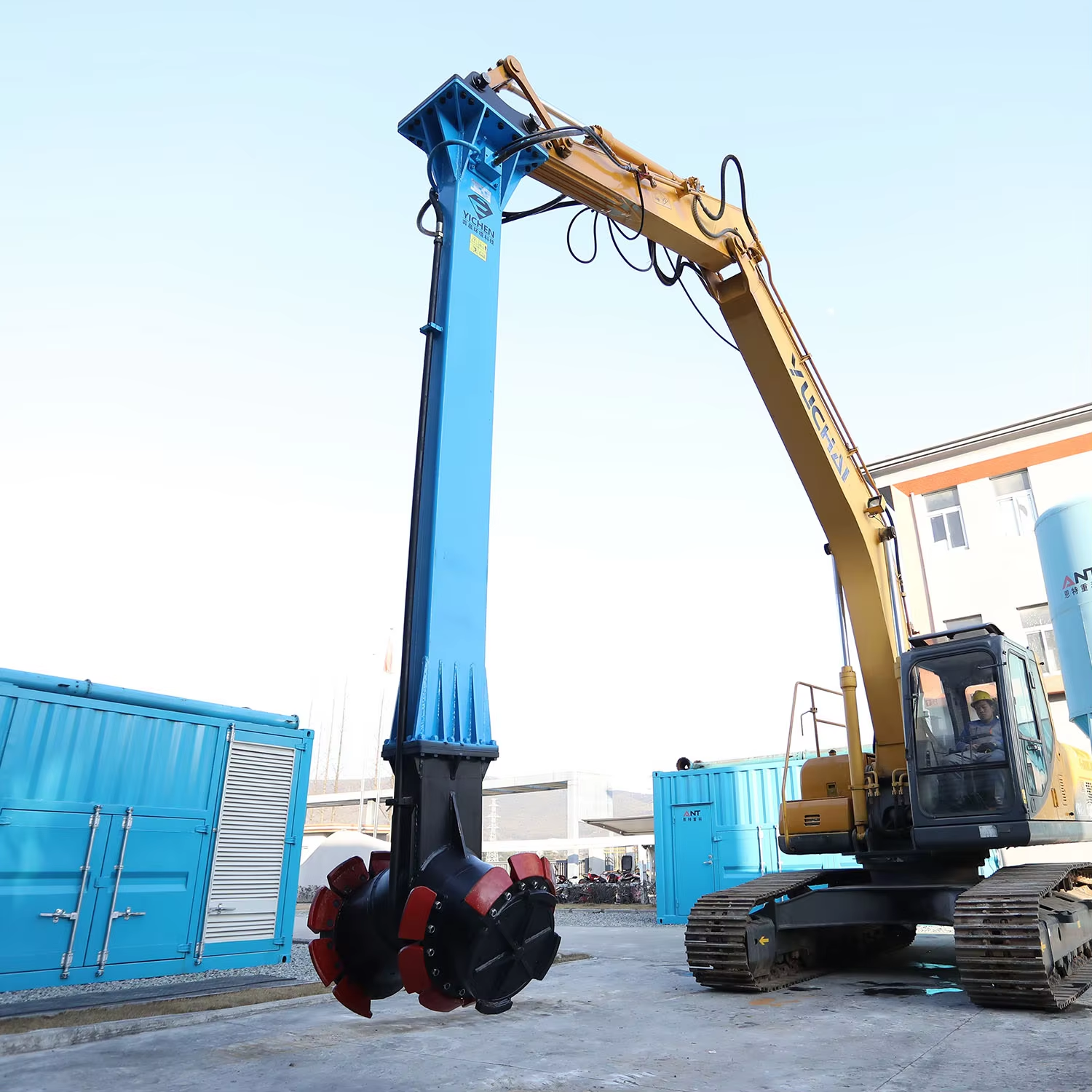
Mixing heads attached to excavators create much better mixed soil binder combinations than what can be achieved through basic hand mixing methods. These machines dig down between 15 to 25 meters deep into the ground, which gets rid of those problematic weak spots that often cause foundation issues later on. Take one city construction job we worked on recently where they used lime cement columns to fix up some really soft clay areas. The results were pretty impressive too, about 35 percent stronger support capacity once everything settled. Newer equipment comes equipped with automatic torque controls plus GPS guidance systems so workers can treat the soil consistently even when working in tight spaces around existing structures. And because of this level of accuracy, there's typically around 28% less digging needed overall. That means lower expenses for contractors and buildings that should last well past half a century before needing major repairs.
Key metrics:
- 12% annual growth in stabilization material demand (2024–2030)
- 40% reduction in raw material use with recycled binders
- 35% higher bearing capacity post-stabilization in soft soils
Excavator Mixing Head Technology: Design, Functionality, and Competitive Advantages
Design and Functionality of the Excavator-Integrated Mixing Head
Today's excavator mounted mixing heads mix things up quite differently from older models. They pair powerful torque augers with hydraulic systems that stir stabilizers such as cement or lime right into the soil layers. What makes them stand out is their modular setup which works across all sorts of ground conditions. These machines can reach down around 8 meters deep and keep the soil density pretty consistent throughout, within about 5% give or take. The real game changer though are those built-in sensors that track how hard the soil resists mixing and measure moisture content on the fly. This lets operators tweak settings mid-job something traditional hand mixing just cant match at all.
Advantages of Leading Manufacturers’ Mixing Systems
Advanced systems reduce project timelines by 35–50% through simultaneous excavation and stabilization, minimizing equipment mobilization costs. Automated binder calibration ensures optimal dosage rates, lowering material waste by 25% compared to non-integrated solutions. These systems also reduce operator fatigue through ergonomic controls and vibration-dampened cabins, enhancing worksite safety.
Comparison with Traditional Soil Mixing Methods
Traditional approaches require separate machinery for drilling, mixing, and compaction—often resulting in uneven binder distribution. Excavator-based systems achieve 95% homogeneity in soil stabilization, improving load-bearing capacity by 30–50% over shallow mixing techniques. This method also eliminates the need for soil transportation, cutting carbon emissions by 20% per project.
Real-Time Control and Depth Monitoring in Geotechnical Soil Mixing
The PLC systems control how fast the augers turn and manage the binder flow depending on what they detect underground in terms of density, which keeps everything aligned with the engineering specs. These depth control lasers keep things straight up and down pretty accurately too, around plus or minus 2 centimeters. That matters a lot when trying to stabilize slopes or get ready for foundations where the ground isn't flat at all. And there are these real time reporting features that log all sorts of soil data as work happens. Makes life easier for quality checks later on when inspectors come around looking at paperwork.
Ground Improvement Applications Using Advanced Excavator Mixing Techniques
From Theory to Practice: The Process of Excavator Mixing in Soft Soils
When attached to excavators, these special mixing heads can actually change how unstable soils behave by injecting binders precisely while mechanically blending everything together. First things first, technicians need to analyze the soil composition to figure out just how much cementitious material needs adding. Then comes the actual work: digging up the soil at the same time as mixing it down to the required depth. What makes this approach so effective is that it creates consistent stabilization even in those tricky soft clay areas and organic soils where regular compaction techniques just don't cut it. Monitoring torque levels in real time during operation helps ensure all the binder gets properly mixed in, which matters a lot when building strong foundations for roads, bridges, and other infrastructure projects.
Enhancing Load-Bearing Capacity with In-Situ Stabilization/Solidification
Modern stabilization systems increase bearing capacity by 250–400% in weak subgrades through customized binder formulations. By creating cement-treated soil columns (1–2 MPa compressive strength), these techniques enable shallow foundations where deep piling was previously required. A 2023 geotechnical study showed stabilized soils supporting axle loads exceeding 12 tons/ft²—comparable to medium-strength concrete.
| Stabilization Method | Depth Capacity | Treatment Time | Cost per m³ |
|---|---|---|---|
| Excavator Mixing | 30m | 15–25 mins | $85–$120 |
| Vibro Compaction | 40m | 45–60 mins | $130–$180 |
| Jet Grouting | 50m | 30–40 mins | $200–$300 |
Case Study: Urban Infrastructure Project Using Soil Stabilization System
A coastal city mitigated liquefaction risks for a light-rail network using 18,000m³ of in-situ stabilization. Excavator mixing heads created 1.2m-diameter soil-cement columns at 8m depths, achieving:
- 28-day compressive strength: 1.8 MPa
- Permeability reduction: 92%
- Project timeline reduction: 34% compared to driven piles
This approach preserved adjacent century-old structures while meeting FHWA standards for seismic-resistant foundations.
Performance Metrics: Compressive Strength and Permeability Reduction
Post-stabilization testing reveals consistent quality improvements:
- 7-day strength: 0.8–1.2 MPa (300–500% vs. native soil)
- 90-day strength: 2.0–3.5 MPa
- Hydraulic conductivity: <1×10⁻⁷ cm/s (suitable for dam cores)
These metrics validate excavator mixing as a viable alternative to conventional deep foundation methods in urban redevelopment projects, particularly where vibration and spoils management are critical.
Foundation Services and Long-Term Durability in Challenging Terrains
Stabilizing Weak Subgrades for Reliable Foundation Services
Poorly compacted subgrades are actually responsible for around 70 percent of all foundation problems we see in city construction projects. That's pretty alarming when you think about it. The good news is there are now modern soil stabilization techniques that tackle this issue head on. These systems work by mixing special cement-based materials right into the weak layers of soil. What makes them remarkable? They can boost load bearing strength by over double what it was originally within just two days! According to research published last year in the field of geotechnics, sites where they used this kind of stabilization saw their ground settling problems drop by almost 9 out of 10 cases compared to old school methods involving lots of digging and replacing soil. For civil engineers working on roadways, factory floors, or residential buildings, these innovations mean turning problematic clay or silt into solid groundwork without having to move mountains of dirt first. It saves time, money, and reduces environmental impact significantly.
Applications in Slope Reinforcement and Retaining Structure Support
Getting slope stabilization right is really important because even just a 1 degree angle off in those reinforcement systems can boost erosion problems by around 40%. Modern excavators come equipped with special mixing heads that handle both soil nail grids and MSE walls down to about 15 meters deep. The result? Shear strength improvements typically range between 300 and 500 kilopascals. Take one recent coastal highway job for instance. Engineers monitored pH levels constantly during the work, which stopped saltwater from eating away at the retaining walls. That small adjustment alone added roughly two decades to the structures' lifespan. These kinds of methods are absolutely necessary in regions prone to landslides. Traditional gabion walls just don't cut it when faced with water pressure above 10 kN per square meter. They tend to give way eventually no matter how well built they seem initially.
Ensuring Long-Term Durability Through Proper Soil Stabilization
When we talk about durability, there are really just two main things that matter most: how much water can get through (which needs to be below 1×10⁻⁷ cm/s) and whether the material stands up to sulfates and chlorides. Tests done recently showed something pretty impressive though – when using better binder mixes, water actually gets into stabilized soils only about 8% as much compared to regular untreated ground. Looking at real world applications helps put this into perspective too. Engineers have been watching these stabilized embankments in Alpine tunnels for over 15 years now, and they've seen less than 2mm worth of movement even after all those freeze-thaw cycles come and go. What makes this work so well? It comes down to getting the chemistry right for each specific site. Take acidic soils for instance – adding around 8 to 12% slag cement seems to stop those nasty reactions that cause problems later on. These reactions are responsible for roughly two thirds of all foundation issues that pop up over time anyway.
FAQ
What is soil stabilization?
Soil stabilization is a method to enhance the strength of soil and reduce its permeability using mechanical, chemical, or biological treatments to create a suitable foundation for construction projects.
Why is soil stabilization important in construction?
It is crucial for improving foundation reliability, preventing ground instability such as liquefaction during earthquakes, and supporting sustainable building practices by reducing raw material usage.
What role does in situ stabilization/solidification play in sustainable development?
In situ stabilization minimizes environmental impact by using recycled materials and supports United Nations sustainability goals by making cities more livable and encouraging responsible consumption.
How do excavator-based soil mixing techniques benefit construction?
These techniques increase structural integrity by providing better binder mixing through excavator-mounted systems, enhancing load-bearing capacity while reducing project timelines and costs.
What are the advantages of modern excavation mixing head technology?
Modern excavator mixing heads offer features such as modular designs and built-in sensors for real-time soil analysis, leading to greater homogeneity and efficiency in soil stabilization projects.
Table of Contents
- Principles of Soil Stabilization and Geotechnical Importance
- Role of In-Situ Stabilization/Solidification in Sustainable Development
- How Excavator-Based Soil Mixing Enhances Structural Integrity
- Excavator Mixing Head Technology: Design, Functionality, and Competitive Advantages
- Ground Improvement Applications Using Advanced Excavator Mixing Techniques
- Foundation Services and Long-Term Durability in Challenging Terrains
-
FAQ
- What is soil stabilization?
- Why is soil stabilization important in construction?
- What role does in situ stabilization/solidification play in sustainable development?
- How do excavator-based soil mixing techniques benefit construction?
- What are the advantages of modern excavation mixing head technology?