EN
EN

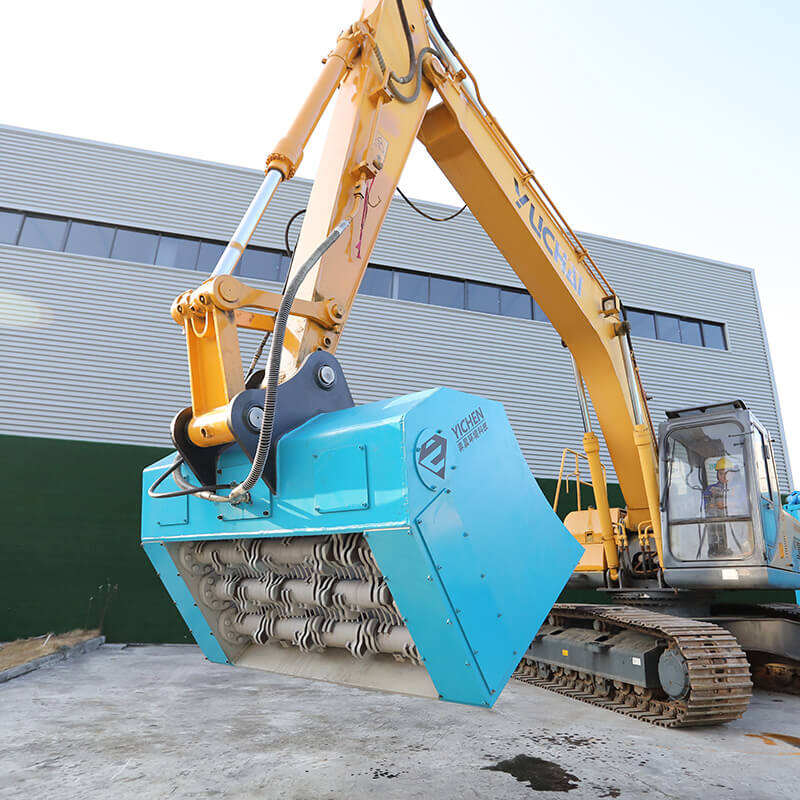
In today’s construction, demolition, recycling, and environmental remediation industries, efficiency means much more than simply moving material from one place to another. Contractors are under growing pressure to reduce waste, lower transportation costs, improve on-site productivity, and recover as much reusable material as possible. That is exactly why the screening bucket has become such an important attachment on modern job sites. According to Yichen, its screening bucket is designed for material separation, mixing, and processing in a single step, and it can be used on excavators, skid steers, and loaders. It is also suitable for handling materials such as clay, contaminated soil, compost, demolition waste, asphalt, coal, and limestone.
What Is a Screening Bucket?
A screening bucket is a hydraulic attachment that transforms a carrier machine into a compact on-site processing unit. Unlike a standard bucket that simply lifts, loads, and dumps material, a screening bucket is built to process mixed material while the machine is operating. In other words, it does not just move material; it improves it, separates it, and prepares it for the next stage of work. This is what makes an excavator screening bucket so valuable in projects where time, labor, and disposal costs all matter.
The main purpose of a screening bucket is to separate fine material from oversized or unwanted material. When operators scoop up soil, rubble, or mixed waste, the bucket processes that load so finer particles can pass through while larger debris remains behind. This simple working principle allows usable material to be recovered directly on-site instead of being hauled away as waste. As Yichen notes, its screening bucket combines screening, crushing, and mixing functions, making it more versatile than a basic separation attachment.
How Does a Screening Bucket Work?
The working process of a screening bucket is straightforward, but its impact on jobsite productivity can be significant. First, the operator loads mixed material into the bucket. Once the hydraulic system is engaged, the internal screening mechanism begins to process the material. As the material moves inside the bucket, smaller particles fall through the screening sections, while oversized material stays inside until it is discharged separately. This allows one machine to perform excavation and screening in a much more integrated workflow.
What makes this process so practical is that screening happens exactly where the material is generated. There is no need to transport the material to a separate screening plant for basic processing. On excavation jobs, this means soil can be cleaned and reused immediately. On demolition sites, it means mixed waste can be separated into more manageable fractions. On recycling projects, it means valuable material can be recovered closer to the source. Yichen specifically highlights the ability of its screening bucket attachment to separate soil from debris, recycle building materials, and support on-site remediation work.
Why Is a Screening Bucket So Useful on Job Sites?
The biggest advantage of a screening bucket is efficiency. Traditional material processing often involves several separate steps. Material is excavated, loaded into trucks, transported, dumped, screened by another machine, and then reloaded again for reuse or disposal. Every stage adds fuel consumption, labor time, machine wear, and operational cost. By comparison, a screening bucket allows material to be processed at the source, reducing both handling time and transport requirements.
Another major advantage is cost control. Disposal fees continue to rise in many markets, and transporting unsorted spoil or waste off-site can quickly become expensive. If contractors can use a soil screening bucket to recover fine soil, separate stone, or remove debris before disposal, they reduce the total waste volume and increase the amount of reusable material. That creates value in two ways: less money is spent on waste removal, and less money is spent on importing replacement material.
There is also an environmental benefit. On-site processing reduces truck movements, lowers fuel usage, and supports recycling. Instead of treating mixed spoil or demolition waste as useless, contractors can turn much of it into reusable resource. This aligns with the growing industry focus on sustainable construction and circular material use. Yichen also emphasizes the environmentally friendly application of its bucket in contaminated soil treatment by mixing stabilizing and solidifying agents directly in the bucket.
Common Applications of a Screening Bucket
One of the most common applications is soil and stone separation. Excavated material often contains soil mixed with rocks, roots, broken concrete, and other debris. A screening bucket makes it possible to recover finer soil for backfilling, grading, or landscaping while separating out the larger unwanted fractions. This is especially useful on site development, roadwork, trenching, and foundation jobs where reusable fill material has real value.
Another important use is in demolition and recycling. Demolition material is rarely uniform. It may include soil, crushed concrete, brick fragments, asphalt, and loose debris mixed together. With a construction waste recycling equipment solution like a screening bucket, contractors can process that material directly on-site and recover usable fractions more efficiently. According to Yichen, its screening bucket is suitable for demolition waste, asphalt, coal, and limestone, which reflects its ability to work across both construction and raw-material handling environments.
A screening bucket is also highly effective in composting and environmental treatment applications. Organic material often needs to be broken up, loosened, or mixed before it can be properly reused or processed further. In that context, the bucket is not just separating material by size; it is also helping prepare the material for a more consistent downstream result. This makes it useful beyond traditional construction, especially in projects that involve soil improvement or site rehabilitation.
Screening Buckets in Contaminated Soil Treatment
One of the more advanced uses of this attachment is contaminated soil remediation. On certain job sites, excavated soil cannot simply be reused or discarded because it contains pollutants that must be treated first. Transporting contaminated soil to an external treatment facility can be costly and logistically difficult. That is why on-site treatment methods are becoming more attractive to contractors and remediation teams.
Yichen states that its contaminated soil treatment equipment can mix solidifying and stabilizing agents directly in the bucket, allowing environmentally friendly treatment of contaminated soils. This function expands the role of the screening bucket beyond simple size separation. It becomes part of a site-based remediation process, helping operators mix treatment agents more uniformly into the soil while continuing to process the material in a controlled way. For projects where environmental compliance and efficiency must go hand in hand, this can be a major benefit.
What Makes a Good Screening Bucket?
Not all screening buckets are equal, and performance depends on more than the screening action alone. A good screening bucket needs to be durable enough for harsh materials, efficient enough to maintain productivity, and versatile enough to serve multiple jobsite needs. Contractors usually look for strong structural design, reliable hydraulic performance, and a system that can handle different materials without constant stoppage or excessive wear.
Yichen describes its screening bucket as durable, efficient, CE certified, ISO 9001 compliant, and backed by more than 20 years of attachment manufacturing experience. Those points matter because contractors are not only buying a tool; they are investing in uptime, safety, and long-term value. A screening bucket that performs consistently under tough site conditions can reduce downtime and improve the return on investment across many different types of projects.
Why More Contractors Are Choosing Screening Buckets
The growing popularity of screening buckets is not difficult to understand. Contractors want attachments that allow one machine to do more work without adding unnecessary complexity to the job. A screening bucket answers that need by combining separation, mixing, and processing into a single attachment. Instead of treating excavation, recycling, and material preparation as separate operations, it turns them into a more streamlined workflow.
This is especially valuable on small to medium job sites where space is limited and bringing in a large fixed screening plant may not be practical. It is also useful on remote projects where transport costs are high and every extra trip matters. For many contractors, the appeal of a screening bucket attachment lies in its ability to cut waste, save money, improve material reuse, and keep more of the work happening where it should happen: directly on-site.
Conclusion
So, what is a screening bucket and how does it work? In simple terms, it is a powerful attachment that allows excavators, skid steers, and loaders to process mixed material directly on the job site. By separating fine material from oversized debris and supporting mixing or treatment functions, it helps contractors work more efficiently and more sustainably. Whether the goal is to recover reusable soil, recycle demolition waste, process compost, or assist with contaminated soil remediation, a screening bucket offers a practical and cost-effective solution.
As jobsite demands continue to evolve, attachments that combine flexibility, productivity, and environmental value will become even more important. That is why the screening bucket is no longer seen as just an optional accessory. It is increasingly becoming an essential tool for contractors who want to do more with less, reduce waste at the source, and create smarter, more efficient workflows. Yichen’s product positioning reflects exactly this trend, presenting the screening bucket as a multi-function attachment for separation, crushing, mixing, recycling, and on-site soil treatment.
Table of Contents
- What Is a Screening Bucket?
- How Does a Screening Bucket Work?
- Why Is a Screening Bucket So Useful on Job Sites?
- Common Applications of a Screening Bucket
- Screening Buckets in Contaminated Soil Treatment
- What Makes a Good Screening Bucket?
- Why More Contractors Are Choosing Screening Buckets
- Conclusion