EN
EN

Understanding Precision Cutting Requirements in Hard Rock Applications
Precision cutting in hard rock environments demands specialized approaches. Unconfined Compressive Strength (UCS) measurements directly determine tool feasibility—granite (150–300 MPa UCS) requires fundamentally different solutions than sandstone (20–80 MPa UCS). Tolerance specifications further narrow options: sub-5 mm dimensional accuracy eliminates tools prone to deflection or kinematic instability.
How Rock Hardness (UCS) and Tolerance Demands Dictate Tool Feasibility
The way materials behave determines how they get cut. When dealing with hard stuff like basalt that has high UCS values, these rocks tend to crack in all sorts of unpredictable ways when hit. That's why diamond abrasion works best here instead of just pounding away with percussion tools if we want to keep the dimensions accurate. At the same time, getting those super tight tolerances right matters a lot too. For architectural profiles needing around plus or minus half a millimeter precision, machines need really stiff blades that stay on track. Drum cutters just can't do this because they work by bouncing back and forth with multiple contact points, which makes them unsuitable for such precise work.
Why Vibration Control and Kerf Consistency Are Non-Negotiable for Sub-Millimeter Accuracy
Managing vibrations properly makes all the difference when it comes to getting precise results. When oscillations go above 0.3 mm in amplitude, they start causing tiny cracks that weaken the structure. This matters a lot for things like load bearing areas or those seismic retrofit slots we install. Keeping kerf widths consistent within plus or minus 0.2 mm means surfaces just snap together instead of needing extra grinding work later on. The whole point here is safety first for everyone working around utility tunnels, connecting precast parts, or dealing with structural slots where engineers have already built specific gap allowances right into their designs from day one.
Rock Saw Advantages for High-Precision Rock Cutting
Clean Kerf Formation and Minimal Overbreak Through Diamond-Blade Kinematics
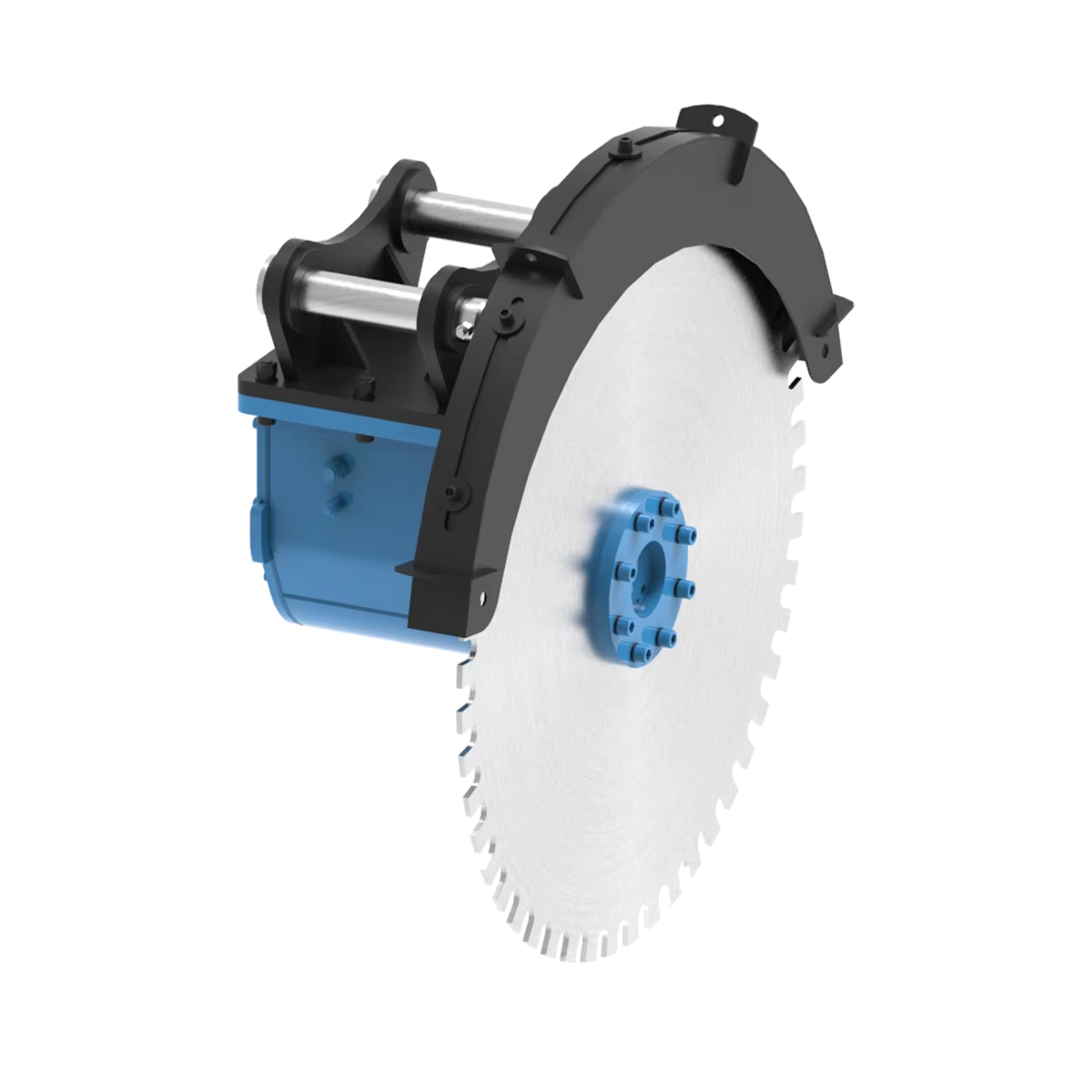
When cutting through hard rock, rock saws can get down to sub millimeter accuracy thanks to specially designed diamond blades. The continuous spinning action creates clean cuts with very narrow grooves and almost no excess breaking beyond what's needed. This matters a lot when projects require tight tolerances around plus or minus 2mm. Diamond blades stand out compared to impact tools because they cause about 70 percent fewer tiny cracks in the surrounding rock. A recent study published in 2023 by folks at the International Society for Rock Mechanics backs this up. What makes these saws so precise? It comes down to how the blades move back and forth in a controlled way, along with the shape of the blade segments and overall rigidity that stops random chips from flying off during tough cuts in materials like granite. Plus, the vibrations stay under 3.5 meters per second squared, which is safely within the limits set by ISO standards for worker safety and protecting nearby structures from damage.
Compact Carrier Integration and Real-World Efficiency Gains
Manufacturers now offer rock saws that attach directly to regular equipment like those big 20-ton excavators already on site, so there's no extra frame work or special vehicles needed. The smaller footprint means these machines can get into tight spots where traditional drum cutters just won't fit, think metro station walls or narrow utility tunnels. Real world tests across three big tunnel projects in Europe found workers completing jobs about 30 percent quicker than with old methods. Why? Because these new systems let operators adjust depth and angle instantly, tilting everything from flat to 30 degrees as needed. Most contractors notice they don't have to move their equipment around nearly as much either, maybe about 25% less often since one pass does what used to take multiple stops. And when dealing with those tricky curves or odd shapes in rock formations, the precision makes a huge difference. We're talking up to 40% less time spent fixing things after the fact, which really adds up over large projects.
Drum Cutter Realities: Where It Excels—and Where It Falls Short for Precision
Partial-Depth Cutting Strengths vs. Inherent Tolerance Limitations in Final Profile Work
Drum cutters work really well for partial depth digging and taking out big chunks of material, especially when working in cities where vibrations need to stay low. According to that latest Field Efficiency Report from the Underground Construction Association in 2024, these machines cut down on ground shaking by somewhere between 70 to 90 percent compared to those old school hydraulic breakers. When dealing with stuff like limestone or reinforced concrete, drum cutters can mill surfaces at rates around 40 to 50 cubic meters per hour, which puts them near the top of what's available in the market today. Plus, the rock fragments they produce are small enough to be used directly as backfill material, so there's no need for extra crushing or expensive hauling operations. But here's the catch with final profiling: in harder rocks where unconfined compressive strength goes above 80 MPa, the cuts tend to drift off track quite a bit, often going beyond plus or minus 15 mm. This happens mainly because the carbide picks wear down over time, the drum itself bends slightly, and tools get pushed sideways during operation. Because of this inconsistency, drum cutters just don't cut it for things like structural joints, smooth finished surfaces, or projects needing super precise measurements down to fractions of a millimeter.
Hybrid Workflow Strategy: Drum Cutter Roughing + Rock Saw Trimming for Optimal Efficiency
More contractors these days are going with this staged hybrid approach that balances fast work with good precision. The process starts with drum cutters taking out around 80 to 90 percent of the material pretty quickly. These machines can handle about 25 to 40 cubic meters per hour when working with medium hard rock. They're great for getting rid of large amounts of material without wearing down expensive diamond tools too much. After that comes the rock saws for the finishing touches. These saws use specially calibrated diamond blades to get within plus or minus 1 millimeter accuracy, leaving smooth surfaces and reducing unwanted damage to surrounding areas. According to reports from the Tunneling Association of North America, this two step method cuts down overall project time by roughly 30 percent and saves about a quarter on tooling expenses compared to using just one type of equipment throughout. We've seen this in action too. Double saw systems have been used successfully on several seismic retrofit jobs where they cleaned up those rough drum cut trenches right down to the exact specs needed, giving us both faster results and the kind of precision engineers really need.
FAQ
What is Unconfined Compressive Strength (UCS) and why is it important?
UCS is a measure used to evaluate the strength of rock material. It influences the choice of tools in rock cutting, dictating methods suitable for materials with different hardness levels.
Why is vibration control important in precision rock cutting?
Proper vibration management is crucial for achieving precise results, as excess vibrations can create cracks and inconsistencies in cuts, compromising the structural integrity.
How do rock saws contribute to high-precision rock cutting?
Rock saws use diamond blades to deliver sub-millimeter accuracy, minimizing kerf width and overbreak, thus maintaining the integrity of the surrounding rock.
What are the limitations of drum cutters in precision work?
Drum cutters tend to offer lower accuracy due to tool wear and deflection, making them less suitable for final profiling or precision-centric projects.
How does a hybrid workflow of drum cutter and rock saw benefit construction projects?
A hybrid approach ensures efficient rough material removal and precise finishing, saving time and reducing tooling costs by around 30% overall.
Table of Contents
- Understanding Precision Cutting Requirements in Hard Rock Applications
- Rock Saw Advantages for High-Precision Rock Cutting
- Drum Cutter Realities: Where It Excels—and Where It Falls Short for Precision
-
FAQ
- What is Unconfined Compressive Strength (UCS) and why is it important?
- Why is vibration control important in precision rock cutting?
- How do rock saws contribute to high-precision rock cutting?
- What are the limitations of drum cutters in precision work?
- How does a hybrid workflow of drum cutter and rock saw benefit construction projects?