EN
EN

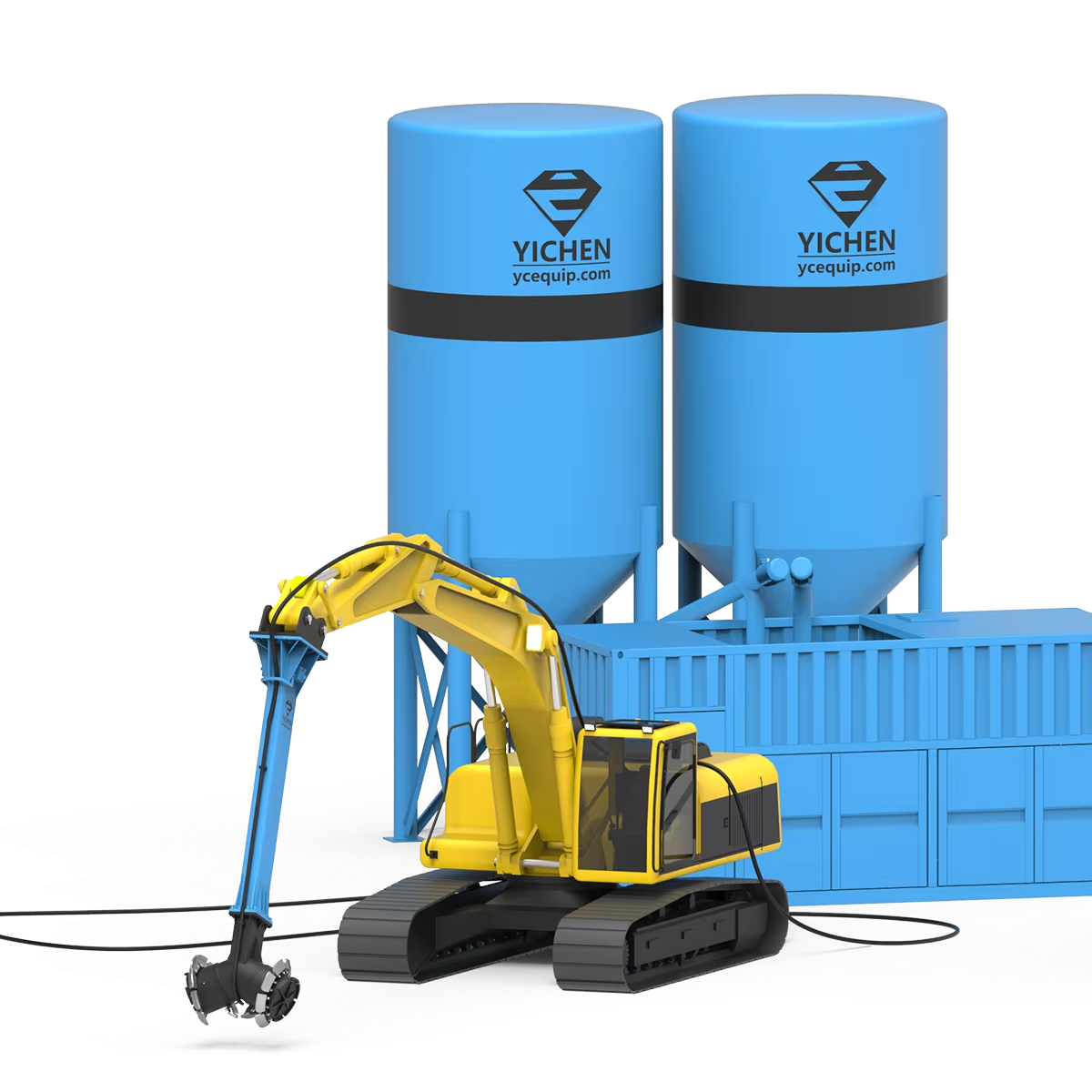
How Hydraulic Excavator-Mounted Mixing Heads Revolutionize Soil Stabilization
Principle of Trench-Soil Mixing (TSM) Technology and Its Role in Ground Integrity
Trench Soil Mixing (TSM) combines mechanical mixing with carefully placed stabilizers to produce uniform soil cement columns that boost load bearing strength anywhere from 3 to 5 times over traditional methods according to a recent study in the Geotechnical Journal. The process works by injecting binding materials directly into existing soil layers. This approach gets rid of those problematic weak spots in the ground. What results are structural formations that can actually transfer weight loads effectively. These modified soil structures hold up much better when subjected to earthquake forces or when supporting large construction projects like highways and buildings.
High-Torque Hydraulic Drive Systems for Efficient Mixing in Dense and Challenging Soils
The latest mixing heads rely on powerful hydraulic motors that can generate around 85 kNm of torque. This kind of power allows these machines to tackle tough jobs like breaking apart soils full of cobbles and those stubborn cemented layers right at speeds between 25 and 40 RPM. What makes them really stand out is their dual axis rotation system. With this feature, they achieve about 98% material mixing in just one go through the ground. That cuts down stabilization time by roughly two thirds when compared with old fashioned auger systems. The benefits become even clearer when working with challenging materials such as high plasticity clay or glacial till deposits where traditional methods just don't cut it.
Deep Soil Mixing Capabilities: Achieving Up to 16 Meters in Urban Metro Projects
New equipment designs have made it possible to stabilize soil down past 16 meters deep, which is really important when building metro tunnels under cities where there's already so much construction above ground. Take Shanghai Metro Line 23 for example. The engineering team there managed to create mixing columns about 2.8 meters across that go all the way down to 16.2 meters, keeping them straight within just plus or minus 15 millimeters vertically. Pretty impressive stuff. What these columns actually do is act as barriers against groundwater seepage, and they help keep the surface from sinking too much in those tricky silty soils that get saturated easily. This kind of precision work makes a big difference in urban infrastructure projects.
Soil stabilization done right there on site lets builders strengthen shaky ground without all the digging work. They pump special cement mixtures straight into the existing soil through those high pressure hydraulic systems we see at job sites. What happens next is pretty impressive actually the treated area becomes a stronger composite material that can hold about 35 to 50 percent more weight compared to regular old dirt. And get this environmental research shows these methods cut down energy usage by as much as 90% when compared to the usual approach where they dig everything out and replace it later. Makes sense why more contractors are turning to this technique nowadays.
Eliminating Excavation and Backfilling Through On-Site Soil Treatment
Hydraulic mixing heads mounted on excavators modify soil in place through a three-stage process:
- Precision slurry injection (15–25% cement content)
- 360° mechanical blending via counter-rotating augers
- Real-time density monitoring using embedded sensors
This integrated approach reduces project timelines by 40–60% compared to conventional excavation and backfill cycles.
Chemical and Mechanical Bonding Mechanisms in Soil-Cement Formation
Stabilization relies on dual bonding mechanisms: pozzolanic reactions between cement and soil silica/alumina, and mechanical interlocking from angular soil fragments. Laboratory testing confirms these bonds achieve 3–5 MPa compressive strength while allowing 0.5–1.5% axial strain flexibility, balancing rigidity with resilience.
Building Continuous, Segmentation-Free Soil-Cement Retention Walls
When continuous trench soil mixing is used, it creates underground retaining walls that don't have those pesky construction joints because the tools overlap as they work. The resulting barriers have really low hydraulic conductivity, something like less than 1 times 10 to the negative seventh power cm per second, so they work great at stopping water flow. In city environments, installation can move pretty fast too, around 2.5 to 3.5 meters per day. Some actual projects have shown that walls stretching 30 meters long can develop passive resistance of about 50 kilonewtons per square meter just three days after the concrete sets. This makes the technique especially valuable for urban infrastructure projects where time and space are limited.
Urban Infrastructure Applications: Strengthening Roads, Rail, and Airports
Hydraulic excavator-mounted mixing heads provide efficient solutions for stabilizing weak soils in transportation infrastructure. Their ability to treat ground in situ supports durable, low-maintenance foundations while avoiding disruptive excavation in congested urban zones.
Reinforcing Soft Subgrades to Improve Load-Bearing Capacity
When dealing with soft ground conditions or soils prone to liquefaction, we're looking at potential reductions in road and rail foundation strength of around 70%, according to research published in the Geotechnical Engineering Journal back in 2022. The solution? Deep mixing technology where specialized equipment injects binding agents well below 12 meters depth. What happens next is pretty impressive - these injections create long-lasting soil-cement columns that make the underlying ground significantly stiffer, sometimes boosting its load-bearing capacity by two to three times what it was originally. This kind of reinforcement stops those pesky differential settlements from occurring when heavy vehicles pass over repeatedly, which means our roads last much longer before needing repairs. Contractors who've implemented this technique across various infrastructure projects have noticed something remarkable too: their maintenance crews show up about 40% less frequently over a decade period compared to traditional stabilization methods. That translates to real money saved and far less disruption for communities living near these transportation corridors.
Case Study: Foundation Stabilization at a Major International Airport Runway
A major airport in Southeast Asia needed to strengthen its runway base covering around 18,000 square meters without shutting down flights. They turned to hydraulic mixing technology to get the job done, aiming for a solid 28 MPa strength in the clay layers found at about ten meters below ground level. The engineering crew managed to put in place 320 soil cement columns within only two weeks, which made it possible for heavyweights like the Airbus A380 to land safely again. After keeping an eye on things for almost a year and a half since completion, they noticed minimal movement - under 2 millimeters of settlement despite constant traffic across those runways.
Expanding Use of Soil Mixing in High-Density Urban Construction Environments
With 68% of global infrastructure projects located in urban areas (World Bank 2023), the compact footprint of soil mixing is increasingly valuable. Recent applications include seismic retrofitting beneath active subway lines and constructing barrier walls within 3 meters of existing buildings. Contractors report 30% faster completion times compared to piling in space-constrained sites.
Environmental and Economic Advantages of In-Situ Stabilization Techniques
Reducing Carbon Footprint Through Minimized Material Transport and Equipment Use
The in situ stabilization method cuts down material transportation needs by around 89% when compared to old school excavation methods according to the latest 2023 Construction Emissions Report. This means way less diesel burned and obviously lower carbon dioxide emissions overall. When projects treat soil right where it sits instead of moving everything off site, they need about 60% fewer big trucks. That translates to roughly 740 kilograms less particulate matter pollution for every 10,000 cubic meters processed. And let's not forget those high efficiency hydraulic systems either. They help slash fuel usage because machines spend 35% less time just idling around waiting for something to happen.
Balancing Cement Usage with Sustainable Construction Goals
With better binder formulas, today's stabilization techniques can hit around 2.4 MPa compressive strength after 28 days while cutting back on cement by roughly 18 to 22 percent compared to regular mixes. Most engineers these days swap out between 15 and 30% of traditional cement for stuff like fly ash or slag waste products. This keeps everything performing well but cuts down carbon footprint significantly, about 440 kg per cubic meter according to recent industry data from Global Cement & Concrete Association. Automated systems now handle binder measurements with pretty good precision too, keeping errors within plus or minus 2%. That matters a lot when working near environmentally protected zones where excess materials could cause problems. All told, this approach saves money across the board. Projects typically see cost reductions between 12 and 18% when looking at total expenses over time versus those old fashioned import export methods used for stabilizing soft soils.
Continuous Barrier Wall Construction for Effective Groundwater Control
Meeting the Demand for Impermeable Barriers in Underground Projects
When building underground in cities, stopping groundwater from getting in is really important. Special mixing heads attached to hydraulic excavators handle this problem using what's called Trench Soil Mixing (TSM) tech. The process makes long-lasting cement-soil barriers that stop water flow better than 1 times 10 to the minus 7th power cm per second according to some research from last year's Geotechnical Journal. These solid walls keep water out of subway tunnels and underground parking garages without needing those expensive sheet piles or extra waterproof layers on the outside.
Hydraulic Sealing Performance of Soil-Cement Walls in Riverbank Retention Systems
Soil-cement barriers outperform traditional slurry walls in both sealing effectiveness and longevity:
| Parameter | Traditional Slurry Walls | Soil-Cement Barriers |
|---|---|---|
| Permeability (cm/s) | 1×10⁻⁷ | 5×10⁻⁸ |
| Construction Speed | 12 m/day | 18 m/day |
| Service Life | 25 years | 50+ years |
A 2023 riverbank stabilization project demonstrated a 89% reduction in seasonal seepage, with walls enduring 2.5 MPa hydraulic pressure—highlighting their durability in demanding hydrological conditions.
Case Study: Waterproofing Solution Using Deep Mixing in Sensitive Environments
For a riverfront project in an area where ecology matters a lot, engineers installed soil cement walls about 14 meters deep. These walls helped stop salt water from getting into fresh water supplies below ground and kept the banks stable when heavy rains came during monsoons. Compared to traditional diaphragm wall methods, this approach cut down on construction waste by around three quarters. Looking at the monitoring results from last year showed something pretty impressive too there was nearly a 95% drop in how much groundwater moved through the site. This meant they hit all their targets for both proper engineering standards and what the environment needed.
FAQs
What is trench soil mixing (TSM) used for?
Trench Soil Mixing (TSM) is used to produce uniform soil cement columns by combining mechanical mixing with stabilizers. It enhances ground stability and load-bearing strength, making it useful for large construction projects.
How do hydraulic mixing heads work?
Hydraulic mixing heads mounted on excavators inject high-torque motors capable of breaking apart dense soils, ensuring efficient mixing and rapid stabilization.
Why is in-situ stabilization preferred over traditional methods?
In-situ stabilization is preferred due to its energy efficiency and reduced environmental impact. It involves treating soil on-site without excavation, thus lowering carbon footprints and material transportation.
Table of Contents
-
How Hydraulic Excavator-Mounted Mixing Heads Revolutionize Soil Stabilization
- Principle of Trench-Soil Mixing (TSM) Technology and Its Role in Ground Integrity
- High-Torque Hydraulic Drive Systems for Efficient Mixing in Dense and Challenging Soils
- Deep Soil Mixing Capabilities: Achieving Up to 16 Meters in Urban Metro Projects
- Eliminating Excavation and Backfilling Through On-Site Soil Treatment
- Chemical and Mechanical Bonding Mechanisms in Soil-Cement Formation
- Building Continuous, Segmentation-Free Soil-Cement Retention Walls
- Urban Infrastructure Applications: Strengthening Roads, Rail, and Airports
- Environmental and Economic Advantages of In-Situ Stabilization Techniques
-
Continuous Barrier Wall Construction for Effective Groundwater Control
- Meeting the Demand for Impermeable Barriers in Underground Projects
- Hydraulic Sealing Performance of Soil-Cement Walls in Riverbank Retention Systems
- Case Study: Waterproofing Solution Using Deep Mixing in Sensitive Environments
- FAQs
- What is trench soil mixing (TSM) used for?
- How do hydraulic mixing heads work?
- Why is in-situ stabilization preferred over traditional methods?