EN
EN

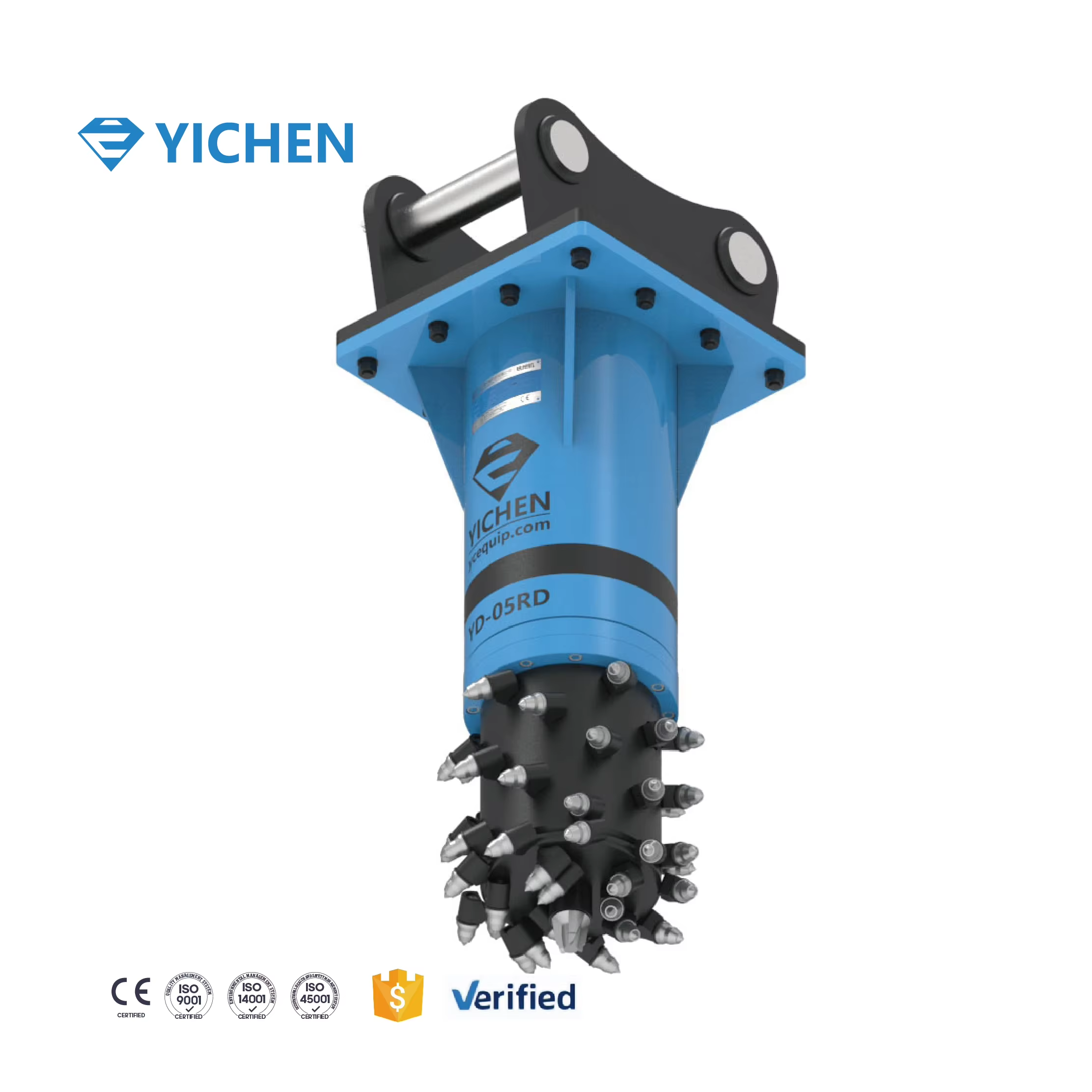
Core Operational Principles: Shear Cutting vs. Impact Breaking
How transverse drum cutters remove material via controlled shear force
Transverse drum cutters work by rotating continuously and shearing away material with good precision. These machines come fitted with teeth made from carbide tips which concentrate force on specific cutting areas. Instead of relying on brute impact like other methods do, they create controlled breaks through shear stress. As the drum stays in touch with whatever surface it's working on, it applies pressure at right angles following how rocks and concrete naturally split apart. What makes this approach stand out is that it removes material predictably without all those random cracks we see when using hammer-like tools. The result? Cleaner cuts and much better accuracy for excavation projects where control matters most.
Why hydraulic breakers depend on high-impact energy–and its risks to substrate integrity
Hydraulic breakers work by hitting things repeatedly with massive force, each strike packing over 1200 joules worth of power. These sudden hits send shock waves rippling through whatever they're breaking apart, often creating cracks that spread way beyond where anyone actually wants them. The vibrations from all this pounding can reach around 14.3 mm/s squared, which is seriously past what's considered safe for nearby structures. Foundations start developing tiny fractures we don't even notice at first, while pipes and cables underground wear out much faster than expected. What gets overlooked is how all this punishment comes right back at the excavator itself too. The constant jarring takes a toll on hydraulics and other parts inside the machine, meaning mechanics have to fix things more often and operators end up replacing equipment sooner rather than later.
Drum Cutter Applications: When Precision Excavation Delivers Superior Outcomes
Rock excavation performance: Drum cutter vs. breaker in medium-strength basalt (UCS 80–120 MPa)
When working with medium strength basalt between 80 and 120 MPa UCS, drum cutters tend to beat hydraulic breakers when it comes to getting things done faster and producing better quality results. Tests on actual sites have shown that these drum systems can keep going at about 2.5 meters an hour because they shear through the rock continuously, whereas breakers only manage around 1.8 meters per hour. What really makes a difference is how evenly the drum cutter breaks down the rock. It creates pretty consistent aggregate sizes with barely any oversized chunks – we're talking under 5% compared to those big breakers which leave behind 30 to 40% oversized material. This means far less rework later on, cutting down processing time by roughly two thirds and saving money overall. Plus, since there's no wild fracturing happening, slopes stay more stable during excavation and there's less unwanted breakage beyond what was planned. For anyone dealing with tough rock formations, this makes drum cutters not just technically better but practically smarter too.
Environmental and Structural Safety: Noise, Vibration, and Adjacent Infrastructure Protection
Quantified comparison: Drum cutter (72 dB, 0.8 mm/s²) vs. hydraulic breaker (102 dB, 14.3 mm/s²)
Drum cutters run around 72 decibels, about what people hear near busy roads, and create just 0.8 mm/s² of shaking. Meanwhile, hydraulic breakers crank out 102 dB, similar to standing next to a jet engine during takeoff, plus they shake things at 14.3 mm/s². These differences matter a lot when it comes to keeping buildings safe and minimizing environmental impact. There's actually a standard called DIN 4150-3 that sets maximum vibration levels under 5 mm/s² for important places like hospitals and old buildings worth preserving. Most hydraulic breakers go way past those numbers, which means potential damage to foundations and problems meeting regulations. Drum cutters stay comfortably within the safety zone though, so nearby structures aren't at risk. Plus their quieter operation cuts down neighborhood complaints by roughly 60 percent, making them much more welcome on city construction sites where noise pollution is always an issue.
Total Cost of Ownership: Drum Cutter Longevity and Equipment Preservation
Reduced dynamic loading extends excavator frame life–TCO analysis over 3,000 operating hours
Drum cutters spread out forces across their cutting surface which cuts down on dynamic loading for the excavator they're attached to. Less shock gets transmitted through to important parts like the frame, undercarriage, and hydraulics, so structural fatigue drops somewhere around 60%. After running for about 3,000 hours, maintenance bills drop by roughly 35 to 40% for key components including bearings, hydraulic lines, and those mounting systems. Real world testing indicates wear pins stay intact almost 2.5 times longer than usual, while frame stress fractures happen about four fifths less often when compared to machines fitted with breakers. The extra money spent upfront on a drum cutter typically pays itself back in just 18 to 24 months operation time. Looking at the big picture over five years, operators see around 22% less in overall costs compared to sticking with those high impact alternatives.
FAQ
What is the main advantage of using drum cutters over hydraulic breakers?
Drum cutters offer more precision and control, reducing the risk of unintended damage, minimizing vibrations, and resulting in cleaner cuts. They also have a longer lifespan, leading to lower total cost of ownership.
How do drum cutters minimize environmental impact?
Drum cutters operate at lower noise levels and produce less vibration compared to hydraulic breakers, making them less disruptive to nearby structures and more compliant with environmental regulations.
Can drum cutters handle tough rock formations?
Yes, drum cutters are effective on medium strength basalt and similar rock formations, providing faster excavation rates and more consistent results.
Are there any financial benefits to using drum cutters?
Yes, although they may have a higher upfront cost, drum cutters lead to reduced maintenance costs and longer equipment lifespan, resulting in lower total cost of ownership over time.
Table of Contents
- Core Operational Principles: Shear Cutting vs. Impact Breaking
- Drum Cutter Applications: When Precision Excavation Delivers Superior Outcomes
- Environmental and Structural Safety: Noise, Vibration, and Adjacent Infrastructure Protection
- Total Cost of Ownership: Drum Cutter Longevity and Equipment Preservation
- FAQ