EN
EN

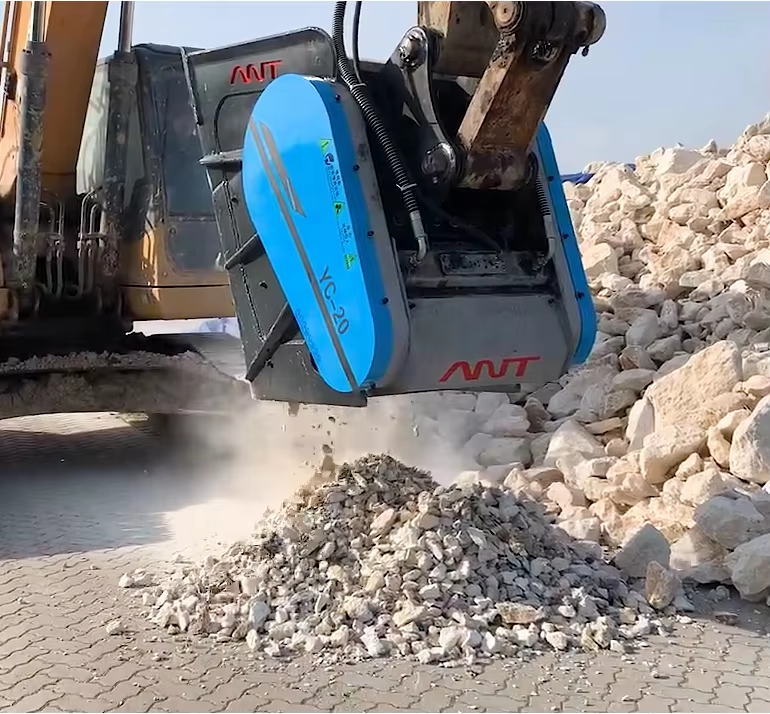
Demolition Efficiency: On-Site Crushing of Reinforced Concrete
Eliminating Haul-Off Costs with On-Site Recycling of Concrete and Asphalt
According to the Ponemon Institute from last year, traditional demolition jobs end up costing around $740k every year just to ship all that junk to landfills. Now enter hydraulic crusher buckets which completely flip this equation. These machines actually break down concrete and asphalt right there on site into stuff that can be reused as aggregate. No need for expensive trucking anymore, no landfill fees to pay, and definitely fewer carbon emissions from those big transport trucks we used to see everywhere. Most contractors tell us they save roughly 40% overall when they take advantage of this crushed material for things like backfill work, subbase layers, or even road bases sometimes within just a few hours after tearing something down.
How Hydraulic Crusher Buckets Process Reinforced Concrete Without Pre-Separation
Modern crusher buckets integrate high-force hydraulic jaws (250+ bar pressure) capable of simultaneously fracturing concrete and shearing embedded rebar—no manual steel extraction required. The process delivers three key advantages:
- 65% faster material processing versus traditional separation and sorting methods
- ASTM C33-compliant aggregate, sized and graded for structural reuse
- Automatic steel recovery, with magnetic discharge systems capturing >95% of ferrous scrap for recycling
This integrated design protects equipment integrity while eliminating labor-intensive pre-processing steps.
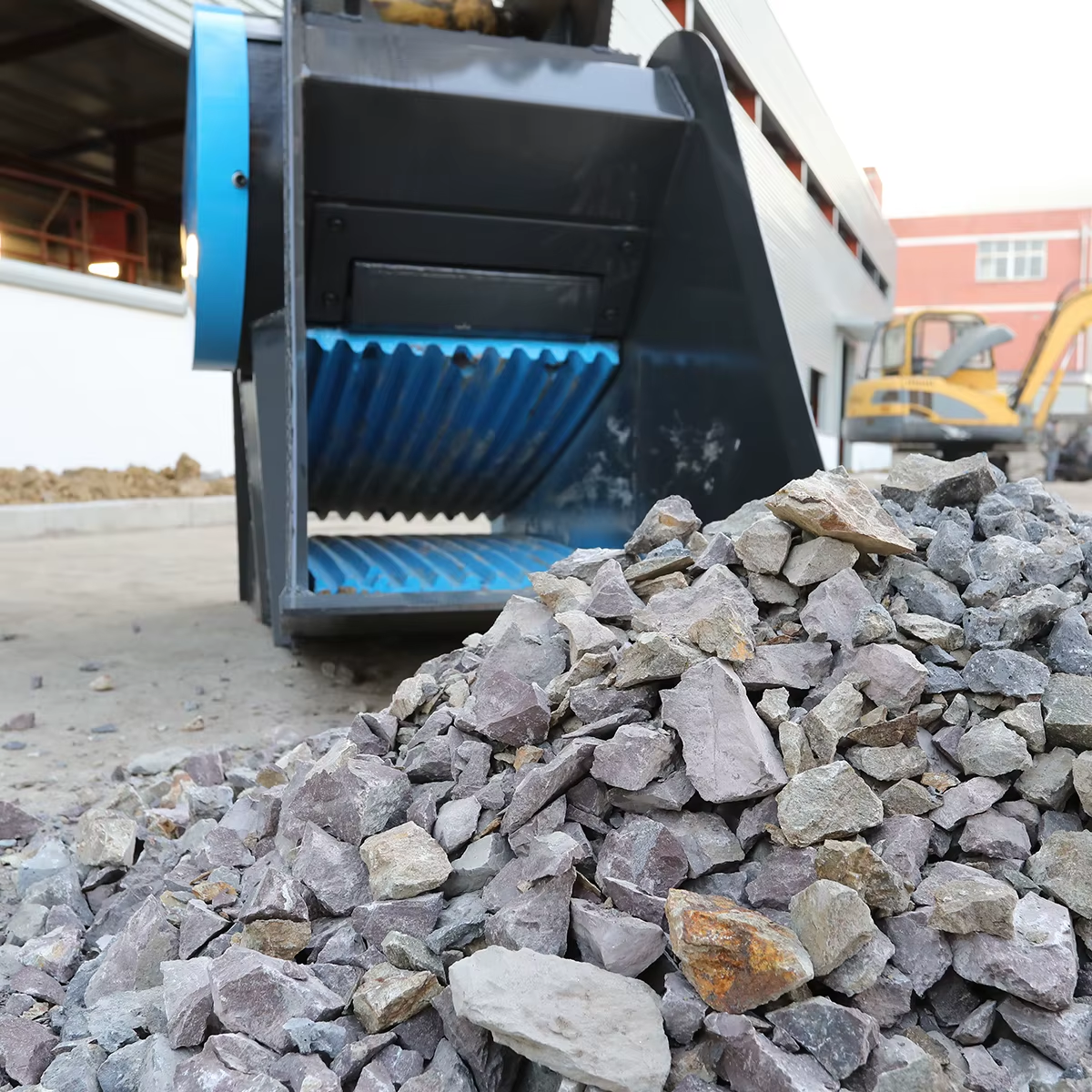
Road Construction Applications: Turning Debris into High-Quality Road Base
Reducing Material Lead Times by 65% Through On-Site Recycling
Crusher buckets really shorten the whole supply chain process because they turn all that demolition waste right into road base material that meets specifications while still on site. When we skip those extra steps like trucking stuff away for crushing, hiring third parties, and dealing with all the logistics of getting materials delivered, construction projects can save as much as two thirds on their material procurement time according to data from various infrastructure projects throughout Europe and North America. Traditional methods usually take anywhere between two to four weeks to get materials ready, but when processing happens right there at the demolition site, crews actually have usable base material available within just a few hours after tearing things down. This makes scheduling much easier since materials are ready exactly when needed rather than waiting weeks. Plus, there's a noticeable reduction in fuel consumption, carbon emissions, and road closures that disrupt local traffic patterns during these operations.
Achieving Consistent Gradation and CBR ≥80 from Construction & Demolition Waste
Crusher buckets, when properly set up, create aggregates with pretty consistent particle sizes which matters a lot for good compaction and how roads hold up over time. Tests show that these newer hydraulic systems regularly hit California Bearing Ratio numbers above 80, which meets what most highway projects need according to those industry standards. The machines come with built in screens that catch unwanted stuff, so they can handle all sorts of mixed materials like old concrete chunks, bits of asphalt, broken bricks, and even metal scraps without messing up the final product quality. What this means is construction and demolition waste gets turned into something that actually works as proper base material for roads and buildings instead of just going to landfill sites. And because everything stays tracked through the process, companies have all the paperwork needed to prove compliance with regulations.
Material Versatility: Crusher Bucket Performance Across Concrete, Asphalt, Rock, and Mixed Debris
Growing Adoption in Urban Zones Due to Multi-Material Processing Capability
More and more contractors are turning to crusher buckets when working in crowded city areas, actually because things get complicated there, not in spite of it. These machines can handle all sorts of tough stuff at once - think reinforced concrete, old asphalt roads, natural stone formations, even mixed demolition junk. No need to sort through everything first or set up multiple steps for processing. On tight job sites where space matters, this one-pass approach means about 40 fewer trucks rolling around according to Construction Waste Journal from last year. Plus, companies save money on landfill costs since they can reuse material right away, and keep the right particle sizes needed for road bases with CBR ratings above 80. Contractors working on urban renewal projects really depend on this kind of flexibility to stay within strict noise limits, air quality standards, and project deadlines. What used to take days now gets done in just a few hours, transforming what was going to be waste into actual building materials that meet certification requirements.
FAQ
Q: What is the main advantage of using hydraulic crusher buckets?
A: The main advantage is the significant cost savings in transportation and landfill fees, as well as a reduction in carbon emissions. They convert demolition waste into reusable aggregate directly on site.
Q: How do hydraulic crusher buckets manage embedded steel in concrete?
A: They have high-force hydraulic jaws that can fracture concrete and shear steel simultaneously, with magnetic discharge systems recovering over 95% of ferrous scrap.
Q: Can crusher buckets handle various types of materials?
A: Yes, crusher buckets can process reinforced concrete, asphalt, rock, and mixed debris without needing separate processing steps.
Q: How do crusher buckets impact project timelines?
A: They significantly reduce project timelines by providing on-site material reuse and minimizing transportation needs, facilitating quicker project completion.